Technology
B.Tech Direct admission in India without an Entrance Exam
Explore B.Tech direct admission in India without JEE. Learn about eligibility, CUET colleges, percentile-based college options, fees, and admission pathways.
29 June 2026
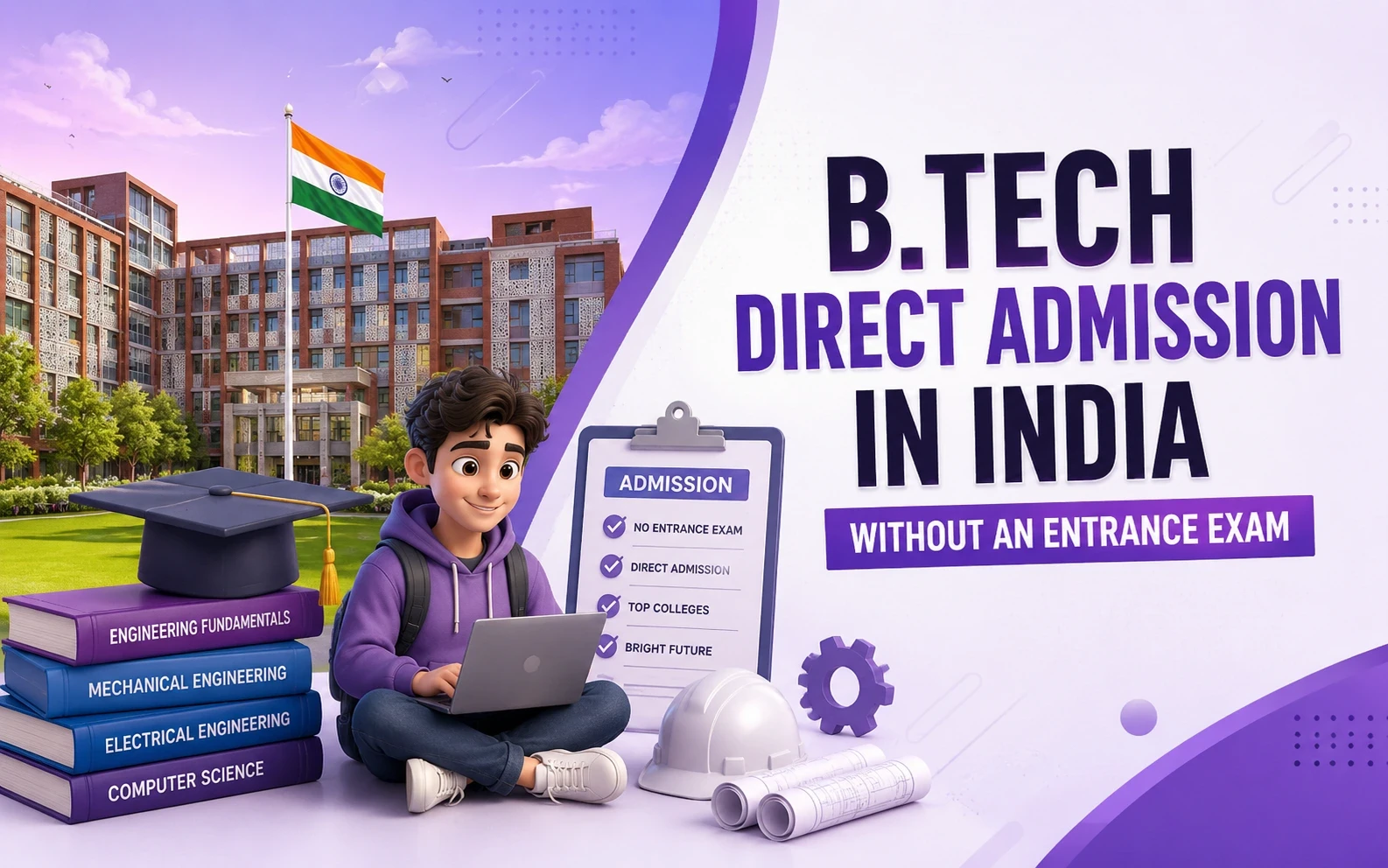
Table of Contents
Introduction
Getting into IITs and NITs is a dream for many engineering aspirants. But what happens if your JEE score isn't what you expected? Or if you want to explore colleges beyond the traditional entrance exam route?
Every year, more than 13 lakh students take the JEE Main exam. Yet only a small percentage secure a seat in an IIT or NIT. In fact, fewer than 2% of applicants make it into these institutions. For everyone else, the journey doesn't end. It simply takes a different direction.
Missing your target percentile does not mean giving up on engineering. Today, many colleges offer B.Tech admissions through CUET scores, Class 12 marks, aptitude tests, and management quotas. These options open the door to quality engineering education for thousands of students every year.
This post explores the major admission pathways available in India. You'll learn about direct B.Tech admissions, CUET-based engineering programs, percentile-based college options, board-mark-based admissions, counselling alternatives, and how to choose the right university for your goals in 2026.
B.Tech Direct Admission in India Without Entrance
When students hear the term B.Tech direct admission, they often assume it means bypassing the admission process altogether. In reality, direct admission simply refers to admission routes that do not require a national engineering entrance exam such as JEE Main.
Many private universities across India admit students based on Class 12 performance, university-level assessments, personal interviews, or a combination of these factors. This gives students additional opportunities to pursue engineering even if they did not appear for JEE or were unable to secure their target percentile.
Who is eligible?
Most universities require students to:
Pass Class 12 from a recognized board
Study Physics and Mathematics as compulsory subjects
Meet the minimum aggregate marks requirement, typically ranging from 50% to 60%
Satisfy any university-specific admission criteria
What are the main routes?
There are four common ways to get B.Tech admission without JEE:
Board merit-based admission: Many colleges admit students based on their Class 12 marks. If you meet the cutoff, you can apply directly and secure a seat through the merit list.
University aptitude test: Private universities like Rishihood conduct their own test (RSAT). These tests are usually less competitive than JEE Main and are considered along with your Class 12 performance during admissions.
CUET scores: More than 200 universities accept CUET UG scores for B.Tech admissions. A single CUET scorecard can help you apply to multiple institutions.
Management quota: Private colleges often reserve a percentage of seats for students who may not have entrance exam scores. Admission is typically based on Class 12 marks and the college's eligibility criteria.
Does the degree hold the same value?
Yes. Once enrolled, the core academic experience remains the same regardless of how you enter. The curriculum, internal assessments, labs, grading, and degree certification do not change based on entry route. Students admitted through direct admission are generally eligible for the same internships, projects, and placement opportunities as other students.
B.Tech Colleges in India Accepting Direct Admission After 12th
India has over 300 engineering colleges in Delhi NCR alone, of which more than 275 are private institutions. Across the country, thousands of AICTE-approved private universities offer B.Tech seats without requiring JEE scores.
Here is a state-wise snapshot of colleges that accept direct admission:
State / Region | Admission Mode | Notable Private Universities |
Delhi NCR & Haryana | Board marks, own aptitude test, CUET | Rishihood University, Amity University, Sharda University, Manav Rachna University |
Uttar Pradesh | Board marks, management quota, university entrance test | GLA University, Galgotias University, Mangalayatan University |
Maharashtra | Board marks, management quota (FRA-regulated) | MIT-WPU Pune, Symbiosis Institute of Technology, DY Patil |
Karnataka | COMEDK, management quota (post-KCET rounds) | RVCE, MSRIT, BMS College of Engineering |
Tamil Nadu | TNEA merit-based, management quota | SASTRA University, Sathyabama University, SRM |
Pan-India (Deemed) | Own entrance exams, JEE optional | VIT Vellore, Manipal, LPU, Amrita |
A few things to keep in mind before choosing a college:
Government colleges are not an option for direct admission. Colleges like IITs and NITs only admit students through JEE scores. Direct admission is mainly available in private and deemed universities.
Deemed universities offer the most flexibility. Colleges like VIT Vellore, Manipal Academy of Higher Education, BITS Pilani, SRM Institute of Science and Technology, Amrita Vishwa Vidyapeetham, Lovely Professional University, and Symbiosis Institute of Technology often have their own admission processes and provide more options for students.
Computer Science seats fill up quickly. Popular branches like CSE and CSE (AI/ML) are usually among the first to fill. If you want Computer Science, apply as early as possible.
You don't always need a JEE rank. Some private universities, such as Rishihood University, accept students through their own entrance tests, as well as CUET and JEE scores. This gives students more ways to secure admission.
Looking beyond entrance scores? Explore Rishihood University's School of Technology, where students learn through real-world projects, mentorship, and interdisciplinary learning from day one. |
CUET Colleges List for B.Tech Courses in India
CUET (Common University Entrance Test) is conducted by NTA and is based entirely on Class 12 NCERT syllabus. That makes it significantly easier to prepare for compared to JEE Main.
Saveral central, state, and private universities accept CUET scores for B.Tech admissions, including BHU, Central University of Jharkhand, and private institutions like Rishihood, and Galgotias University. In total, over 50 B.Tech courses are available across branches such as Civil Engineering, Electrical Engineering, Mechanical Engineering, Computer Science, and ECE through CUET.
Here is a quick look at the types of institutions and branches available:
Institution Type | Examples | B.Tech Branches Available |
Central Universities | BHU Varanasi, JMI New Delhi, Central University of Haryana | CSE, ECE, Civil, Mechanical, IT |
State Universities | Various across UP, Rajasthan, Odisha | CSE, EE, ME, Civil |
Private Universities | Rishihood University, Galgotias, GD Goenka, Amity Noida | CSE, AI & ML, Data Science, ECE |
Deemed Universities | Manipal, LPU | CSE, IoT, Robotics, Core branches |
CUET vs JEE Main: which should you choose?
If you are targeting IITs or NITs, JEE Main is the only route. But if you prefer a simpler syllabus, flexibility in course options, or are aiming for central or private universities, CUET can be the smarter choice.
Already have a CUET score? Rishihood University accepts CUET for B.Tech in Computer Science and Engineering. [Check eligibility and apply] |
JEE Main Colleges in India by Percentile Range
One of the biggest mistakes students make after JEE Main results is focusing only on their percentile. What matters more is knowing which colleges you can realistically get into.
Also, remember that college cutoffs change every year. Factors like the number of students appearing for the exam, difficulty level, available seats, category, and home-state quota can affect admissions.
Use the table below as a general guide to plan your options, not as a guarantee of admission.
Percentile Range | Typical College Options |
99+ | Top NITs (Trichy, Warangal, Surathkal) — CSE, ECE |
95-99 | Mid-tier NITs, select IIITs, GFTIs |
90-95 | Newer NITs (NIT Puducherry, NIT Goa, NIT Manipur), IIIT Pune, IIIT Sri City |
80-90 | NIT Raipur, NIT Agartala, NIT Durgapur, NIT Jalandhar, IIITM Gwalior, KIIT, BIT Ranchi |
70-80 | Select state engineering colleges, private universities |
Below 70 | Private universities, management quota, CUET route |
Important: A lower percentile does not mean fewer career opportunities. Students can explore direct admission routes, CUET-based admissions, board-merit admissions, and university-specific selection processes.
B.Tech Admission Through Board Marks in India
If you did not take JEE Main or CUET, you can still get admission to many B.Tech programs through your Class 12 board marks. This is one of the easiest admission routes available.
Who can apply?
Most private engineering colleges require only 45%–50% marks in Class 12 with Physics, Chemistry, and Mathematics (PCM).
Before applying, keep these basic requirements in mind:
Physics and Mathematics are compulsory for all B.Tech programs.
Chemistry is usually required as the third subject, though some colleges also accept Biology or Biotechnology.
Students are generally expected to be at least 17 years old at the time of admission.
How does the admission process work?
After you apply through a university's admission portal, the university prepares a merit list based on your Class 12 marks.
If you meet the cutoff, you will be invited for:
Document verification
Counselling or a short interview (in some cases)
Seat confirmation
Rules vary by state
Admission processes differ across states.
Maharashtra uses a Centralised Admission Process (CAP).
Tamil Nadu admits students through TNEA merit ranks.
Many private universities in Delhi NCR and Haryana, like Rishihood, run their own admission process, allowing students to apply directly without waiting for state counselling.
One important thing to remember
Online or distance-learning B.Tech degrees are generally not accepted as regular engineering degrees. Always choose an on-campus, AICTE-approved B.Tech program and verify its approval status before taking admission.
Management Quota B. Tech Admission in India for Engineering Courses
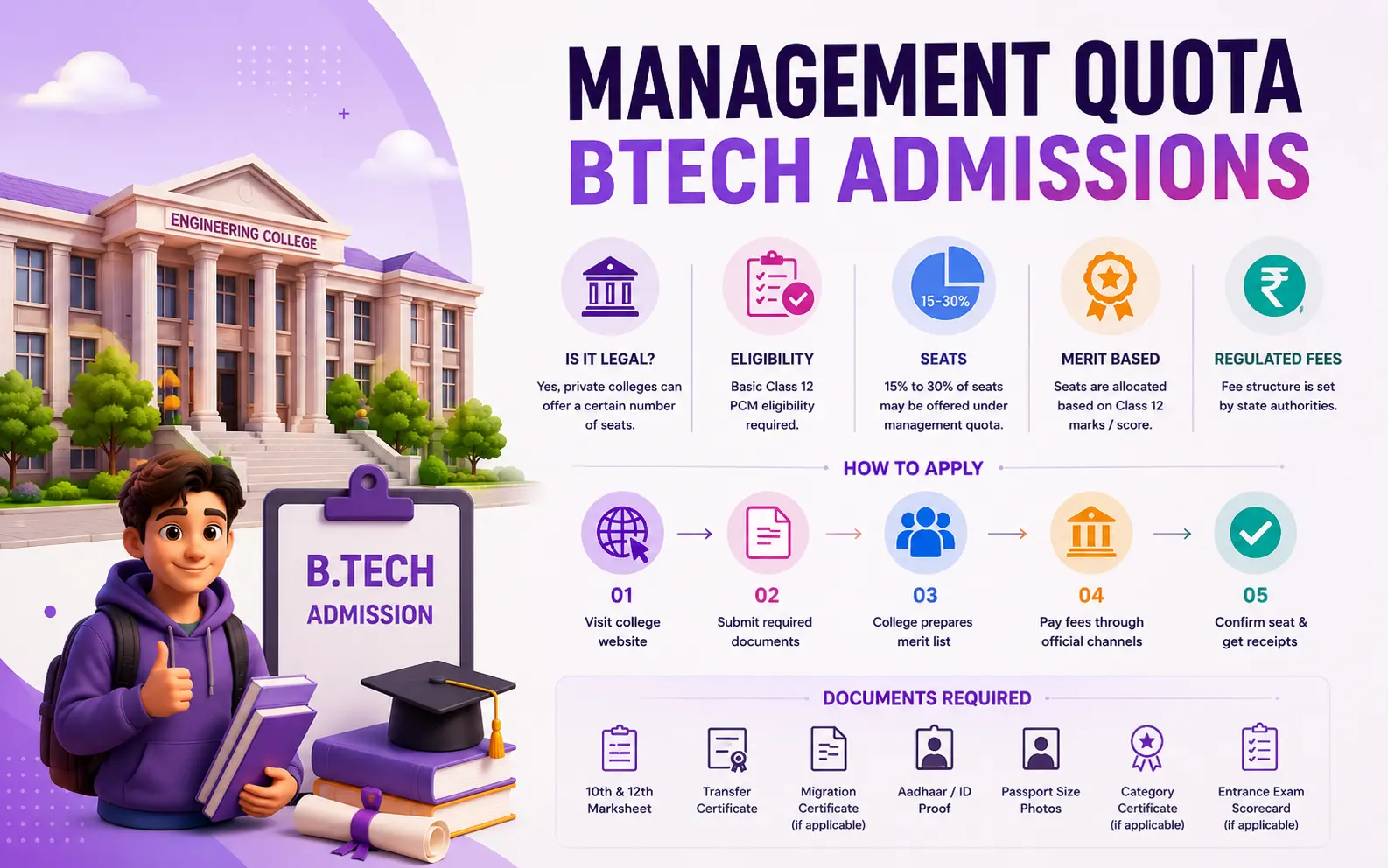
Management quota is another admission pathway available at some private engineering colleges in India. Under this route, a certain percentage of seats may be allocated directly by the institution, subject to applicable regulations and eligibility requirements.
Management quota allows students to get admitted based on basic Class 12 PCM eligibility rather than entrance exam ranks. The remaining 70% to 85% of seats are filled through merit counselling as usual.
Is it legal?
Yes. Private colleges are allowed to fill a certain number of seats through management quota admissions.
However, management quota does not mean anyone can get admission. Students must still meet the college's minimum eligibility requirements, such as the required Class 12 marks and subject combinations.
Management quota admissions must also follow merit-based guidelines, and colleges cannot charge arbitrary fees. The fee structure is regulated by the relevant state authorities.
How to apply
Visit the official college website and look for "Management Quota" or "Institutional Seats"
Submit Class 10 and 12 marksheets, transfer certificate, and ID proof
Even within management quota, top-tier colleges prepare an internal merit list based on Class 12 marks or exam scores to allocate branches transparently.
Once a seat is offered, pay fees through official banking channels, demand draft or net banking directly to the college account
Three things to verify before paying:
Confirm the college is AICTE-approved at aicte-india.org
Get a written fee breakup including hostel, exam, and other charges
Collect official payment receipts for every transaction
Documents Required for Direct B.Tech Admission in India
Whether you're applying through direct admission, board-mark-based admission, CUET, or a university-specific process, keeping your documents ready can help avoid last-minute delays.
Most universities typically require:
Class 10 mark sheet and passing certificate
Class 12 mark sheet and passing certificate
Transfer Certificate (TC)
Migration Certificate (if applicable)
Passport-size photographs
Aadhaar Card or another valid government-issued ID
Category certificate (if applicable)
Entrance exam scorecard (if applicable)
Character certificate from the previous institution
Some universities may also request additional documents such as proof of address, income certificate, or certificates for extracurricular achievements and scholarships.
Before submitting your application, check the university's official admissions page for the latest requirements. Missing documents can delay admission, counselling, or seat confirmation.
A few practical tips:
Keep both physical copies and scanned PDFs of every document ready before admission season opens
Some universities ask for documents to be self-attested; others require notarised copies. Check each university's specific requirement
If your Class 12 result is awaited, many private universities allow provisional admission on the basis of Class 11 marks or board hall ticket, with final admission confirmed after results
B.Tech Fee Structure in Private Universities in India
In India, B.Tech course fees at private universities can range from approximately ₹4 lakh to ₹20 lakh or more for the entire program. Programs in Computer Science, Artificial Intelligence, Data Science, and other high-demand fields often fall toward the higher end of the spectrum due to specialized labs, technology resources, and industry integration.
Institution Type | Approx. Annual Fee | Total (4 Years) |
Government colleges (NITs, GFTIs) | ₹75,000 to ₹1.5L | ₹3L to ₹6L |
Private AKTU-affiliated colleges (UP, Delhi NCR) | ₹70,000 to ₹1.5L | ₹3L to ₹6L |
Private universities (Delhi NCR, Haryana) | ₹1L to ₹3L | ₹4L to ₹12L |
Deemed universities (VIT, Manipal, SRM) | ₹2L to ₹5L | ₹8L to ₹20L |
B.Tech Fee Structure at Rishihood University
Rishihood University in Sonipat, Haryana offers two B.Tech programs under the Rishihood-NST partnership: B.Tech CS & AI and B.Tech CS & Data Science.
B.Tech CS & Data Science: Tuition fee of ₹4.2 lakh per year, with hostel and mess charged separately as a residential program.
What the fee covers beyond academics:
Students get access to paid internship opportunities, industry-led learning, mentorship from experienced business and technology leaders, startup support, and hands-on workshops throughout the program.
The curriculum is designed with input from professionals from leading technology companies, helping students build skills that employers value.
Scholarships are available including the Makers Fund (merit-based) and need-based financial aid for eligible students. Top rankers in recognized tests can receive up to 100% scholarship on tuition.
Want the complete fee breakup for both programs? [Download the Rishihood B.Tech brochure here.] |
AICTE and UGC Approval Check Before Taking Admission
UGC (University Grants Commission) determines whether an institute can call itself a university and award degrees. AICTE (All India Council for Technical Education) approves technical and management programmes, like engineering, MBA, pharmacy, architecture. Students should verify both UGC recognition and applicable AICTE approvals before taking admission. For a B.Tech degree, both layers matter.
How to verify AICTE approval:
Go to aicte.gov.in
Click on "Approved Institutions"
Search by State and College Name. Each AICTE-approved institution has an Approval Code. Cross-check the approval status — Active or Lapsed — for the academic year you are joining.
Confirm that the specific B.Tech program (e.g., CSE, AI) you want is listed under that institution, not just the institution overall
How to verify UGC recognition:
Go to ugc.gov.in
Navigate to the "University" section
Check under State Private Universities or Deemed Universities depending on the college type
Confirm the university name appears in the official list
How to check NIRF ranking:
Go to nirfindia.org and search under the Engineering category. Top 100 in NIRF is generally considered tier-1; top 200 is tier-2. An unranked college is not automatically bad, but it is a signal to dig deeper.
A Simple Admission Checklist
Before paying any admission fee, verify:
☐ UGC recognition
☐ Required approvals and compliance
☐ Accreditation status
☐ Curriculum quality
☐ Internship opportunities
☐ Placement support
☐ Fee transparency
☐ Scholarship availability
☐ Alumni outcomes
At Rishihood University's School of Technology, learning goes beyond classrooms. Students work on real-world projects, receive mentorship from industry practitioners, and get opportunities to build portfolios before graduation.
B.Tech Counselling Alternatives Outside JoSAA in India
JoSAA is not the only counselling system in India. If you missed JoSAA or did not get a seat, here are three active alternatives.
CSAB (Central Seat Allocation Board)
CSAB runs after JoSAA rounds close and fills vacant seats in NITs, IIITs, and GFTIs. It also has a Special Round for NRI and foreign national candidates. If you have a valid JEE Main score but did not get a seat through JoSAA, CSAB is your next stop. Register at csab.nic.in.
State counselling
Every state runs its own counselling process for state-level government and private engineering colleges. Examples include JAC Delhi (for DTU, NSUT, IGDTUW), JOSAA Haryana (for state institutions), MHT CET counselling in Maharashtra, and KCET counselling in Karnataka. These are separate from JoSAA and accept JEE Main scores along with state entrance exam scores.
University-level counselling
Private universities run their own independent admission cycles. VIT runs VITEEE counselling, SRM runs SRMJEEE counselling, and Rishihood University runs admissions through RSAT. These are open regardless of your JoSAA or state counselling status and have their own timelines, typically between May and August.
Missed JoSAA? Rishihood University admissions remain open through an independent application process. |
Rishihood University B.Tech Admission — No JEE Required
Rishihood University is a UGC-recognised private university located in Sonipat, Haryana, about 50 minutes from Delhi's Jahangir Puri Metro Station. It is part of Delhi NCR and is one of the few universities in the region where B.Tech admission does not require a JEE Main score.
Programs offered under the School of Technology:
B.Tech in Computer Science and Artificial Intelligence: Designed in collaboration with Newton School of Technology, with a focus on AI, machine learning, and real-world applications
B.Tech in Computer Science and Data Science / Business Analytics: Combining data analytics, business intelligence, and predictive modelling
Admission criteria for B.Tech:
Students require a minimum of 60% in Class 12 from any recognised board. Admission is based on RSAT, SAT, CUET, or JEE scores, combined with a personal interview. If you have a valid JEE Main or CUET score, you can skip the RSAT entirely.
What is RSAT?
RSAT (Rishihood Scholastic Aptitude Test) is Rishihood's own online aptitude test. It tests reasoning, quantitative aptitude, and verbal ability, not JEE-level Physics or Chemistry. The RSAT also doubles as a scholarship test, so a strong score can reduce your fees significantly.
Scholarships available
:
Rishihood offers merit-based scholarships through RSAT performance, board marks, and JEE scores. The university also offers need-based and category-specific scholarships including Bharat Ki Beti (girl students from smaller towns), Fauji Kid (armed forces families), and Khiladi (sports achievers).
How to apply:
Go to rishihood.edu.in and click Apply Now
Register and fill out the application form
Schedule your RSAT online, or upload your JEE / CUET / SAT scorecard
Attend a personal interview (conducted online)
Receive your offer letter
Pay the fee to confirm your seat
What makes the program different
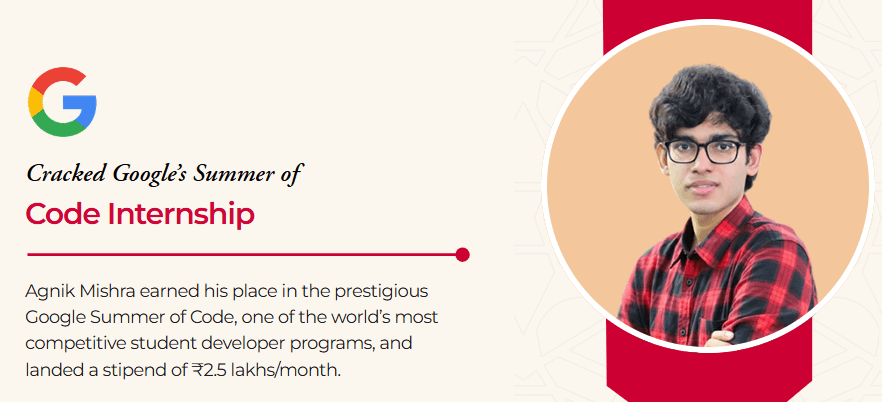
The curriculum is designed with input from Google and Microsoft experts. 93% of second-year students secured paid internships, with an average stipend of ₹25,000 per month. Students also get access to a startup fund and mentorship from 100+ CXOs.
Your Path to B.Tech Does Not Begin and End with JEE Main
Getting into engineering is no longer dependent on a single entrance exam.
Whether you're applying through JEE Main, CUET, board-mark-based admissions, state counselling, or direct admission routes, there are multiple pathways to pursue a quality B.Tech degree in India.
The key is to focus on what happens after admission. Look for a university that offers strong academics, hands-on learning, internships, mentorship, and opportunities to build real-world skills.
If you are a Class 12 student looking for a B.Tech in CS, AI, or Data Science in Delhi NCR without JEE pressure, Rishihood University's admissions are open for 2026.
Apply now at rishihood.edu.in or schedule a campus visit to see the program in person.
FAQs
Can I get B.Tech admission without JEE Main?
Yes. Many private universities offer B.Tech admission through Class 12 marks, CUET scores, university-specific assessments, or direct admission processes.
Which colleges offer B.Tech direct admission in India?
Several private universities across India, including Rishihood University, offer direct admission based on academic performance and university-specific criteria. Always verify eligibility, approvals, and program quality before applying.
Is CUET accepted for B.Tech admissions?
Yes. Many central, state, and private universities accept CUET scores for selected B.Tech programs. Admission criteria vary by institution.
What should I check before taking direct admission in a B.Tech college?
Verify UGC recognition, required approvals, curriculum quality, internship opportunities, placement support, scholarships, and industry partnerships before making a decision.