Business
How to Become an Entrepreneur: A Guide to Begin with for Students and Young Dreamers
The article gives a roadmap for young aspirants wondering how to become an entrepreneur with a good BBA Course from best university in India
28 August 2025
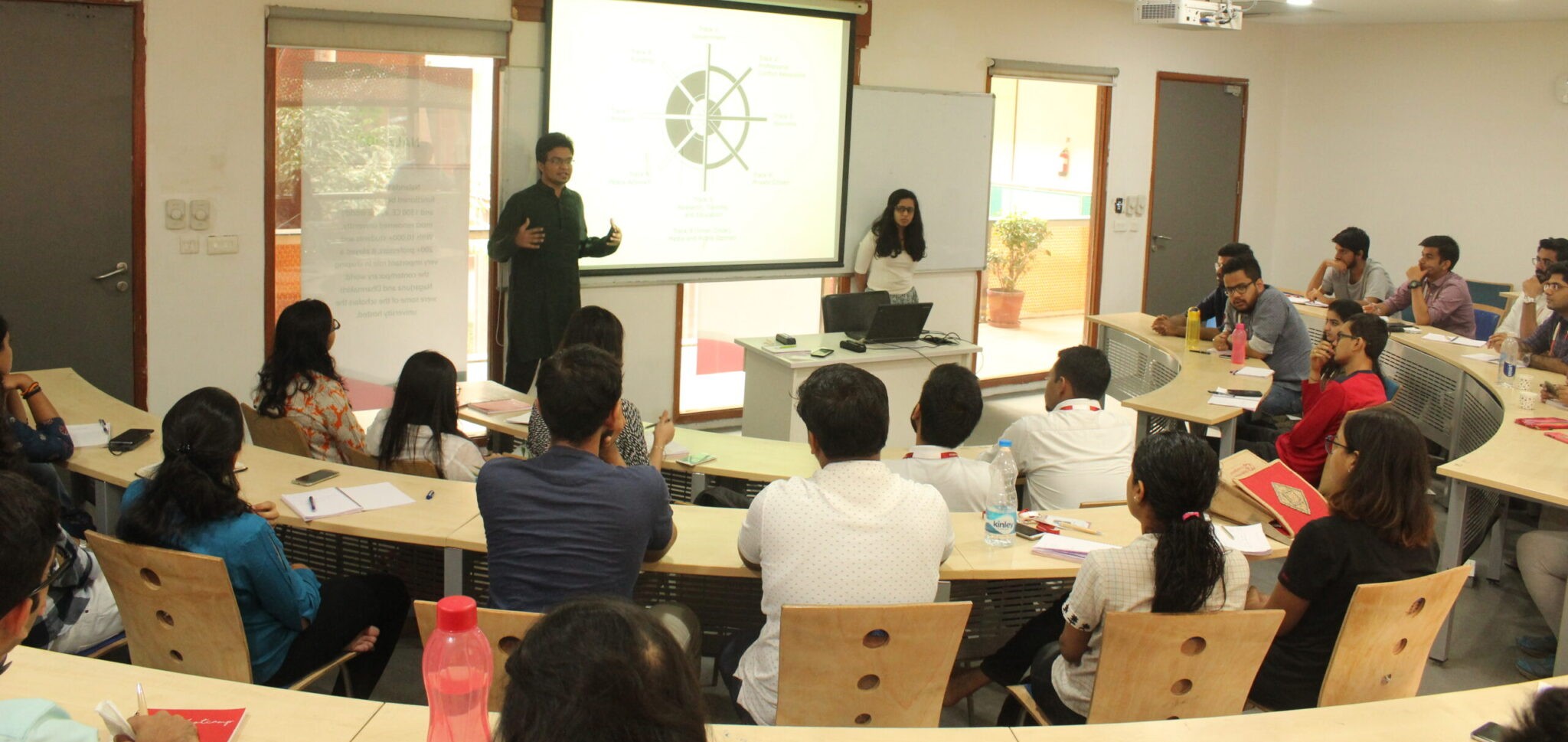
Table of Contents
Entrepreneurship is more than starting a business—it is the act of turning ideas into reality, solving problems, and creating value for society. For students and aspiring founders, understanding how to become an entrepreneur is the first step toward building something impactful. The journey is exciting, challenging, and rewarding in more ways than meets the eye.
Ample opportunity to innovate, take risks, and build meaningful ventures: is this what entrepreneurship entails? Or does one need to possess certain qualities that make them exceptional entrepreneurs?
Who Is an Entrepreneur?
Let’s begin with the word itself, “entrepreneur” comes from the French verb entreprendre, which means “to undertake.” In simple terms, an entrepreneur is someone who undertakes the risk of starting an enterprise, innovating, or finding new solutions to existing problems. Economists like Richard Cantillon described entrepreneurs as people who are willing to bear uncertainty for potential reward.
In today’s context, who is an entrepreneur? Maybe this set of characteristics can be defined as someone who:
Takes Risks: Accepting financial, social, or personal uncertainty to chase a vision.
Innovates: Bringing new products, services, or models into the market.
Leads: Organizing teams, securing resources, and making decisions.
Solves Problems: Identifying gaps and creating solutions that add value.
Seeks Independence: Driven by autonomy and the desire to shape their own path.
Entrepreneurship is as much a mindset as it is a career choice. Take the example of Ritesh Agarwal, the founder of OYO, who started as a college dropout with a vision to provide affordable stays across India. Today, OYO operates globally, trades publicly, is worth millions and serves millions of travelers. This is yet another great encapsulation of entrepreneurship—spotting a gap in the market and building a scalable solution.
The Functions of an Entrepreneur
For a college student considering a career in entrepreneurship, it is important to understand the functions that entrepreneurs serve in any ecosystem. They perform several critical roles that drive both economy and society
Innovation – Developing new products, processes, or services.
Risk Bearing – Accepting responsibility for uncertain outcomes.
Resource Organization – Gathering capital, manpower, and technology.
Decision-Making – Choosing strategies, markets, and operational methods.
Leadership – Inspiring, motivating, and guiding teams.
Social Responsibility – Creating jobs and contributing to economic growth.
These set of functions exhibit that entrepreneurs are not just business owners—they are catalysts for change.
Business Owner vs Entrepreneur
Another area of confusion is the distinction between a traditional business owner and an entrepreneur. While both create enterprises, their approach and outlook are different.
Category | Business Owner | Entrepreneur |
Mindset | Focus on stability and consistent profits | Focus on innovation, disruption, and scaling |
Risk-taking | Limited, prefers safe ventures | High, embraces uncertainty |
Growth | Local or small-scale operations | National or global aspirations |
Example | A shop owner running a local grocery | Ritesh Agarwal building OYO into a multinational chain |
The Difference Between Entrepreneur and Intrapreneur
While entrepreneurship often means building something from scratch, innovation can also thrive within existing organizations. And that’s where intrapreneurs come in. The concept of the intrapreneur emerged in the late 1970s and early 1980s. It was first formally introduced by Gifford Pinchot III, an American author and consultant, in his 1985 book Intrapreneuring: Why You Don’t Have to Leave the Corporation to Become an Entrepreneur.
The idea came about as large corporations realized that innovation wasn’t just happening outside in startups—companies needed employees who could think like entrepreneurs within the organization to drive growth and develop new products or services.
The term itself combines “intra” (inside) with “entrepreneur,” literally meaning an entrepreneur working inside a company.
It was popularized in tech and R&D-heavy industries, where fostering internal innovation became critical for staying competitive.
Classic examples from the early days include 3M where Spencer Silver and Art Fry developed the Post-it Note internally. Or Sony, where Ken Kutaragi championed and delivered the PlayStation project despite a lot of initial resistance.
The difference between entrepreneur and intrapreneur lies mainly in ownership and risk:
Feature | Entrepreneur | Intrapreneur |
Work Environment | Starts a new venture independently. | Works within an existing company. |
Risk | Bears personal financial and operational risks. | Minimal personal risk; the company absorbs it. |
Resources | Must secure funding and team independently. | Has access to company resources. |
Rewards | Profits and recognition belong to the entrepreneur. | Salary, bonuses, or recognition, but profits belong to the company. |
Motivation | Independence and vision-driven. | Innovation within organizational boundaries. |
For students, this means that an entrepreneurial career can be pursued either by founding a startup or by becoming an intrapreneur in a company that values innovation.
Some Indian Entrepreneurs of Some Note
India has a rich tradition of entrepreneurs who combined vision with resilience. Despite being ravaged by the economics of colonialism, India has risen to become a global economic powerhouse once again. And this has been made possible through the entrepreneurial contributions of certain pioneers in diverse fields like technology, healthcare, finance, and education.
R.D. Tata: Pioneered aviation and expanded the Tata Group into diverse industries while prioritizing ethics and employee welfare
Dhirubhai Ambani: Revolutionized equity participation by making stock markets accessible to ordinary Indians.
Narayana Murthy: Built Infosys with just $250, introducing India to the global IT services map.
Kiran Mazumdar-Shaw: Founded Biocon from her garage with ₹10,000, later making it a biopharmaceutical leader worth billions.
Sachin & Binny Bansal: Sparked India’s e-commerce revolution with Flipkart.
Bhavish Aggarwal: Changed urban mobility with Ola.
Falguni Nayar: Built Nykaa into a billion-dollar company and became a symbol of late-blooming entrepreneurship.
These examples also highlight that entrepreneurship is certainly not limited by age, background, or gender.
The Rise of Women Entrepreneurs in India
Entrepreneurship in India is no longer a male-dominated domain. Today, women are breaking barriers, challenging norms, and creating businesses that are reshaping industries. Their journeys are not just about profits—they are stories of resilience, innovation, and impact, inspiring a whole generation of students to dream big .
Falguni Nayar (Nykaa) – A former investment banker who built one of India’s most successful beauty and lifestyle platforms.
Kiran Mazumdar-Shaw (Biocon) – A pioneer in the biotech industry, bringing global recognition to India’s healthcare innovations.
Vandana Luthra (VLCC) – Transformed India’s beauty and wellness industry with a global brand.
These women exemplify the power of determination and creativity. They prove that gender is not a limitation—entrepreneurship is about bold ideas, relentless effort, and the courage to take risks. For students, their stories are a reminder that innovation and leadership have no boundaries. More recently, women entrepreneurs in India such as Aditi Gupta (Menstrupedia) have combined social impact with innovative business models. Government initiatives like Stand-Up India and Mudra Yojana are also helping women gain access to capital and mentorship.
Government Initiatives to Promote Entrepreneurship in India
In a bid to galvanise entrepreneurship for economic growth, the Indian government has launched multiple programs to encourage startups:
Startup India (2016) – Provides tax exemptions, simplified regulations, and funding support for startups.
Stand-Up India (2016) – Focuses on empowering women and marginalized groups to start ventures with bank loans.
Atal Innovation Mission (AIM) – Encourages innovation through Atal Tinkering Labs and incubation centers.
Digital India – Promotes digital infrastructure, empowering entrepreneurs in tech-based sectors.
Mudra Yojana – Provides micro-finance loans to small businesses and first-time entrepreneurs.
These initiatives are aiming to create a nurturing ecosystem, especially for young students who want to transform ideas into real businesses.
Learning Entrepreneurship in College
Many students ask whether entrepreneurship can be learned, and if at all, are teachers really the ones to teach it? While creativity and risk-taking are indeed personal traits, structured education does provide a solid set of tools, networks, and frameworks.
A BBA in Entrepreneurship is a great way to begin equipping students with business acumen, finance, marketing, and leadership skills needed to build startups. For others, entrepreneurship courses, workshops, or even master classes online can provide learning and practical exposure through case studies, startup projects, and mentorship.
Universities like Rishihood emphasize experiential learning, encouraging students to apply classroom knowledge to real-world business opportunities. For college students, pursuing these academic pathways is a strong step toward transforming an entrepreneurial vision into a successful venture. A dedicated Makers Fund for student startups, dedicated research and development facilities, along with mentorship from some of the world’s foremost minds help learners every step of the way
Best Book Recommendations on Entrepreneurship for Students
Reading the right books can shape an entrepreneurial mindset. Some of the best entrepreneur books include:
The Lean Startup by Eric Ries – Teaches building businesses with limited resources.
Zero to One by Peter Thiel – Focuses on creating unique, breakthrough innovations.
The E-Myth Revisited by Michael Gerber – Explains why technical skills alone don’t make a successful business.
Shoe Dog by Phil Knight – A candid memoir of Nike’s founder.
Good to Great by Jim Collins – Explores what makes companies last.
Business Sutra by Devdutt Pattanaik – Brings Indian wisdom to modern business challenges.
Connect the Dots by Rashmi Bansal – Inspiring stories of Indian entrepreneurs without formal MBAs.
How to Become an Entrepreneur: Actionable Steps for Students
Here is a roadmap for young aspirants wondering how to become an entrepreneur:
Identify a Problem – Look for everyday challenges that need solutions.
Build an Idea – Develop a concept that addresses this problem innovatively.
Research the Market – Study customers, competitors, and demand.
Start Small – Launch a prototype or pilot project to test your idea.
Seek Mentorship – Learn from experienced entrepreneurs and faculty.
Create a Business Plan – Outline strategy, costs, and growth roadmap.
Network & Collaborate – Build connections with peers, investors, and incubators.
Learn Continuously – Enroll in an entrepreneurship course to strengthen skills.
Be Resilient – Accept failures as stepping stones.
Think Long-Term – Focus not only on profit but also on purpose and impact.
A Future Full of Entrepreneurship
Entrepreneurship is not reserved for the few—it is a journey open to anyone with vision, persistence, and courage. Whether through founding a startup, innovating within a company, or pursuing education like a BBA in entrepreneurship, the opportunities are endless for today’s students.
The stories of Indian pioneers and women entrepreneurs in India show that entrepreneurship is about much more than profit—it is about solving problems, creating impact, and shaping the future. For every young dreamer asking how to become an entrepreneur, the answer is simple: start today, start small, and keep learning. But most importantly: start with hope, always.