Technology
Is B.Tech in Computer Science Worth it in 2026-27? Engineering College in India
Explore if B.Tech Computer Science is worth it in 2026–27. Compare CSE vs IT vs AI, job demand in India, with nearly 45% of engineering enrollments in CSE
27 April 2026
TL;DR
Table of Contents
Computer Science and Engineering continues to dominate engineering choices in India, with over 3.9 lakh enrollments, making it the most in-demand stream. In regions like Delhi NCR, this demand is clearly visible with IT firms, startups, and AI-driven companies still hiring actively.
But the real question is: Will a B.Tech in Computer Science actually give you an edge, or just put you in an overcrowded race?
The signals aren't straightforward. India entered 2026 with tech job openings down 24%, yet Global Capability Centres alone are expected to create over 4.25 lakh new jobs this year. At the same time, companies like TCS have reduced their workforce significantly.
So which story is true: shrinking opportunities or expanding demand?
This guide breaks it down clearly. From what you study and the skills you build to what the job market truly looks like, to help you decide if B.Tech CSE is still worth it in 2026–27.
Is B.Tech in Computer Science worth it in 2026–27?
Yes, but the conditions attached to that "yes" matter more than ever.
B.Tech in Computer Science still offers strong career outcomes. But the degree alone isn’t enough.
1. It’s worth it if you learn beyond the syllabus
India’s tech industry employs over 5.4 million professionals and continues to expand. But hiring now prioritizes problem-solving and real-world exposure over academic scores.
Colleges that integrate real-world exposure, industry projects, startup ecosystems, and interdisciplinary learning produce stronger graduates.
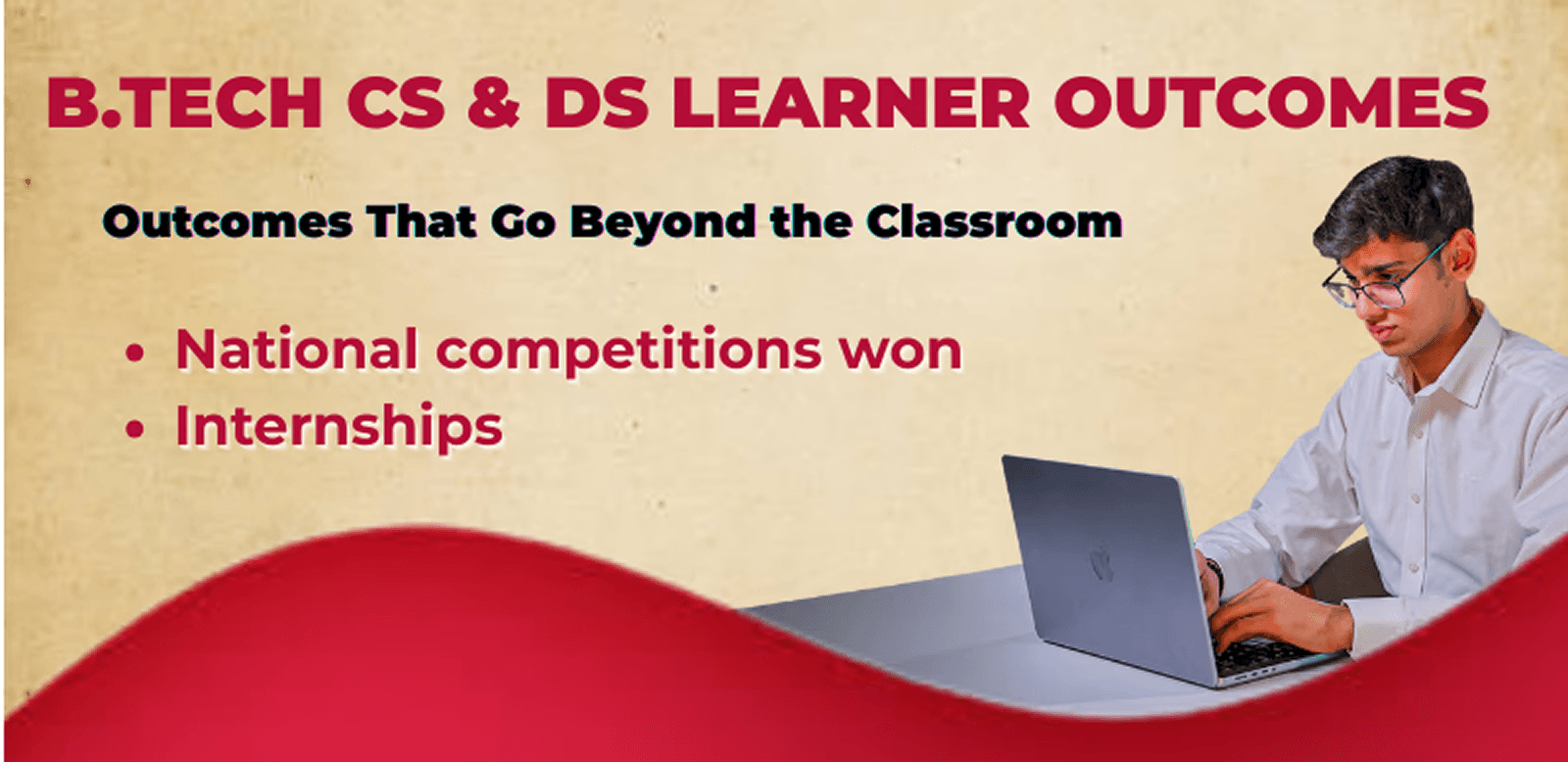
Rishihood University is one of the clearest examples of this in Delhi NCR. Founded by IITians and backed by a Board of Advisors that includes MIT's former Deputy Dean (a Padma Shri awardee), its B.Tech in CS & DS program is built around a simple premise: you start coding from Day 1, not semester 3. Students don't just study AI and data science, rather they build with it, with access to real industry projects and a startup fund that goes up to ₹10 lakh.
Rishihood is not your regular university where you get a degree and pass out, it is THE ONLY one in India where ethics and morals are valued equally. The university is heaven for those with an entrepreneurial mind because it has the Utsaha Incubation Center to nurture brilliant minds.
2. It’s worth it if your curriculum matches industry shifts
AI, cloud computing, and cybersecurity are reshaping Computer Science. AI and Data Science roles are growing at 30–35% annually in India.
Strong programs now include:
Machine Learning and AI
Data Engineering
Cloud Computing
Cybersecurity fundamentals
Rishihood University's B.Tech in CS & AI program is built precisely around this shift. Rather than treating AI as a third-year elective, it weaves machine learning, data systems, and real-world AI tools into the core curriculum from the start, giving students the runway to build genuine depth by graduation.
3. It’s not worth it if you treat it as a default choice
With nearly 45% of engineering enrollments already concentrated in Computer Science and related fields, the competition is intense.
If you have little interest in coding, or technology-driven work, forcing a CSE degree can lead to poor outcomes. Alternatives like IT, design, or business-focused programs may be a better fit.
Final answer
CSE is worth it only if you:
Build skills beyond the classroom
Choose future-ready programs
Stay adaptable
B.Tech CSE course details and subjects you study in India
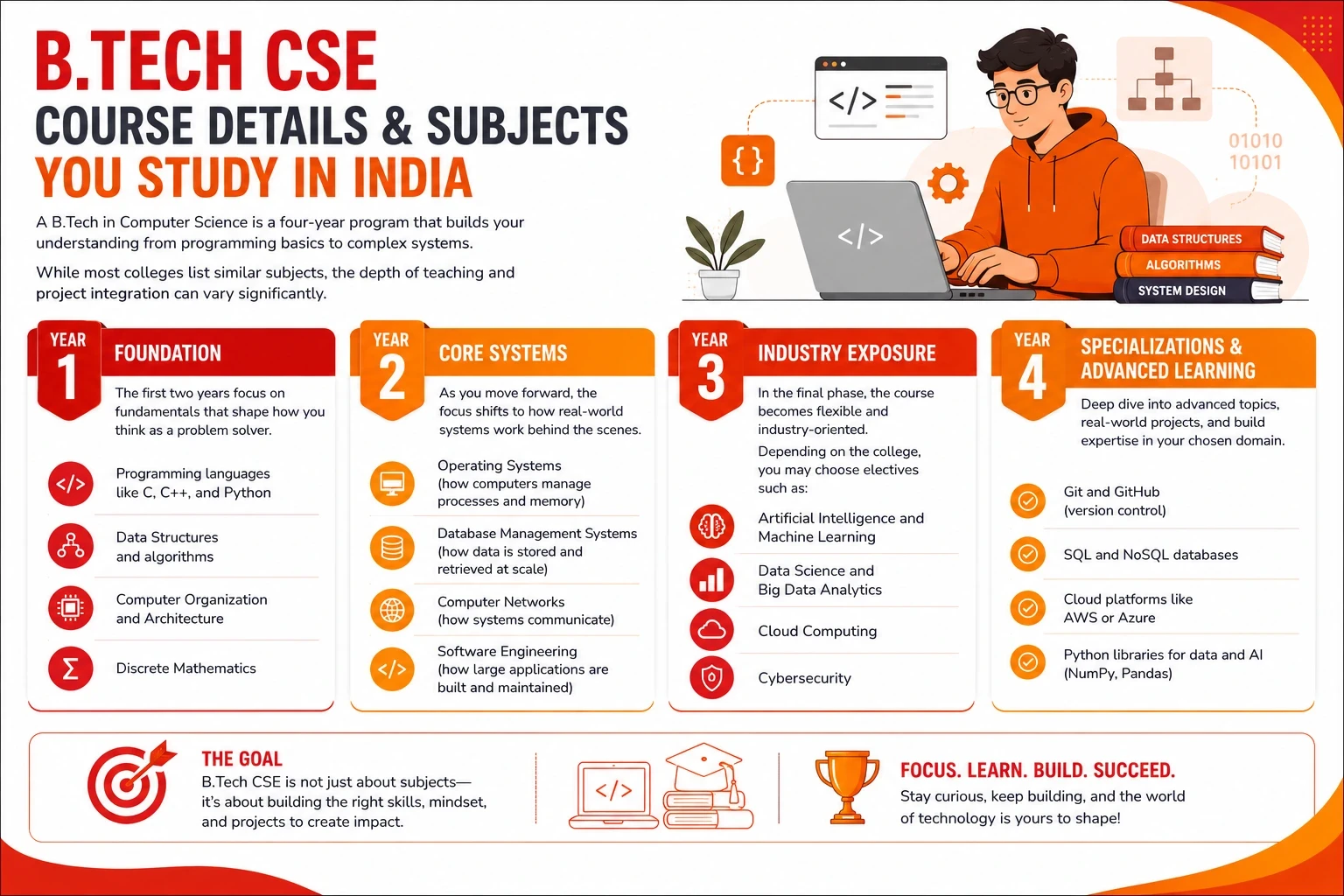
A B.Tech in Computer Science is a four-year program that builds your understanding from programming basics to complex systems.
While most colleges list similar subjects, the depth of teaching and project integration can vary significantly.
Year 1: Foundation
The first two years focus on fundamentals that shape how you think as a problem solver. You’ll typically study:
Programming languages like C, C++, and Python
Data Structures and algorithms
Computer Organization and Architecture
Discrete Mathematics
Year 2: Core systems
As you move forward, the focus shifts to how real-world systems work behind the scenes:
Operating Systems (how computers manage processes and memory)
Database Management Systems (how data is stored and retrieved at scale)
Computer Networks (how systems communicate)
Software Engineering (how large applications are built and maintained)
Year 3: Industry exposure
In the final phase, the course becomes flexible and industry-oriented. Depending on the college, you may choose electives such as:
Artificial Intelligence and Machine Learning
Data Science and Big Data Analytics
Cloud Computing
Cybersecurity
Year 4: Specializations
Git and GitHub (version control)
SQL and NoSQL databases
Cloud platforms like AWS or Azure
Python libraries for data and AI (NumPy, Pandas)
B.Tech IT vs B.Tech CSE difference (Sonipat, Haryana and Delhi NCR students must know)
At first glance, B.Tech IT and B.Tech CSE look similar. They both lead to careers in the tech industry. But the difference becomes important when you look at what you study, how deeply you go, and the kind of roles you’re prepared for.
Here's a quick comparison that matters for placement season:
Factor | B.Tech CSE (Computer Science Engineering) | B.Tech IT (Information Technology) |
Core focus | Foundations of computing, algorithms, software development | Application of technology, systems, and infrastructure |
Depth of programming | High (data structures, algorithms, system-level coding) | Moderate (more implementation-focused) |
Key subjects | OS, DBMS, Algorithms, Computer Architecture | Networking, DBMS, Information Security, IT Systems |
Approach | How systems are built | How systems are managed and maintained |
Career roles | Software Developer, Backend Engineer, AI/ML Engineer | System Admin, Network Engineer, IT Analyst |
Flexibility across domains | Higher (AI, product, startups, deep tech) | Moderate (IT services, support, infrastructure) |
Relevance in AI era | Strong (core for AI/ML, data systems) | Limited unless supplemented with additional skills |
Best fit for | Students interested in coding, logic, and building products | Students interested in systems, networks, and IT operations |
In high-growth roles like AI, backend systems, and product engineering, this difference becomes even more pronounced.
Quick decision guide
Choose B.Tech CSE if you want deeper technical knowledge
Choose B.Tech IT if you prefer practical applications
If your goal is AI, product development, or high-growth tech roles → CSE is usually the safer bet
Skills you gain in B.Tech Computer Science in 2026–27 India
A B.Tech CSE builds practical, industry-relevant skills:
1. Problem-solving: Breaking down complex problems, designing efficient solutions, and thinking logically.
2. Programming and development: Building real applications using languages like Python, Java, or C++, along with working on APIs, databases, and debugging systems.
3. Systems thinking: Understanding how software, hardware, networks, and databases work together.
4. AI and data awareness: Basic exposure to machine learning, data handling, and AI tools.
5. Project execution and teamwork: Working on real projects, collaborating in teams, and delivering outcomes.
6. Adaptability: The ability to continuously learn and stay relevant as tools, technologies, and roles evolve.
Career scope after B.Tech CSE in India
CSE offers strong career paths, especially in tech hubs like Gurgaon and Noida, but outcomes vary widely.
Entry-level roles
Software Developer / Software Engineer
Web Developer (Frontend/Backend)
Data Analyst
System Engineer (especially in IT services)
QA / Testing Engineer
Growth roles
Backend or Full-Stack Developer
Data Scientist or Machine Learning Engineer
Cloud Engineer / DevOps Engineer
Cybersecurity Specialist
Product Engineer in startups or tech companies
Salary reality
Entry-level: ₹3–6 LPA (common baseline)
Strong placements: ₹10–20+ LPA
High-end roles (product/AI): can go much higher
Most students fall in the middle range. The difference comes down to skills, not the degree.
The skill gap problem
Companies are not struggling to find graduates. They’re struggling to find job-ready engineers.
This is why:
Some students get multiple offers
Others struggle despite having the same degree
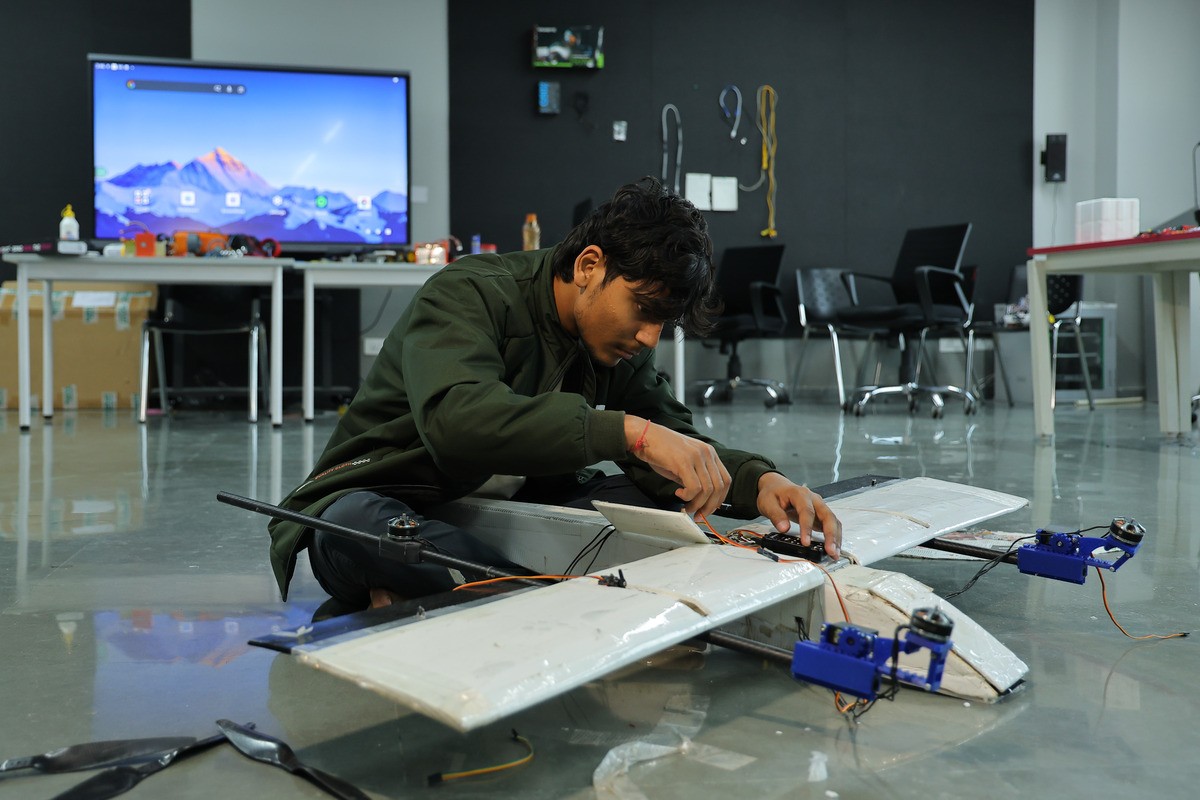
Colleges that emphasize strong project work and industry interaction are the ones closing this gap. Rishihood University is built specifically around this problem. For instance, a first-year student from Rishihood built in.culcate, a digital storytelling app, that makes Indian history engaging through short byte-sized content. Backed by ISB Hyderabad, it won first prize at IIT Roorkee.
B.Tech Artificial Intelligence and CS AI courses in India
AI-focused B.Tech programs are gaining serious traction. You’ll see options like:
B.Tech in CSE (AI and ML)
B.Tech in Artificial Intelligence and Data Science
How AI courses differ from CSE
AI programs build on the same base as CSE but introduce specialization earlier:
Machine Learning
Deep Learning
Data Science
Natural Language Processing
You spend more time working with data and models, less on broader system-level concepts.
The upside: early specialization
AI job postings in India grew 320% year-over-year, outpacing talent supply by 4:1.
This creates a clear advantage for students who start early. These courses offer:
Early exposure to AI tools
More relevant projects
A faster path into ML and data roles
CSE vs AI: what should you choose?
Go for CSE (core) if you want flexibility and a strong base
Choose CSE with AI specialization if you’re already clear about working in AI/data
If you’re unsure, CSE is the safer bet. You can always specialize later.
Demand for Computer Science engineers in job market
The demand for Computer Science engineers in India is strong, but not uniform.
India’s IT industry employs over 5.4 million professionals. Moreover, Global Capability Centres (GCCs) are expanding rapidly in Gurgaon and Noida, reinforcing NCR as a key hiring region.
At the same time, hiring has become stricter. Entry-level job openings saw a dip in early 2026, and companies are increasingly filtering candidates.
The takeaway is simple: CSE is still in demand, but only for those who can prove their skills.
When B.Tech IT or other branches may be better than CSE
B.Tech CSE isn’t the right choice for everyone, and forcing it often leads to poor outcomes.
If you’re not interested in coding or logical problem-solving, CSE can feel frustrating very quickly. The curriculum is demanding, and without genuine interest, most students struggle to go beyond the basics.
In such cases, B.Tech IT can be a better fit. Other branches may also make more sense depending on your strengths:
Electronics and Communication (ECE): good for core tech, embedded systems, and hardware-related roles
Mechanical or Civil: better aligned with non-software career paths
Specialized programs (AI, Data Science): suitable if you already have a clear interest in data-driven fields
Choosing CSE just because it’s popular is one of the biggest mistakes students make.
Best B.Tech CS AI course options in India
Choosing the right B.Tech CSE or AI program matters more than the branch name itself.
A strong program should include:
Updated curriculum aligned with AI, cloud, and data technologies
Hands-on projects and real-world problem-solving
Access to internships, industry exposure, and startup ecosystems
Faculty with both academic and practical experience
Rishihood University checks every box on this list, and adds a few others. Its curriculum is updated in partnership with industry, its faculty bring real-world experience into the classroom, and its students have done internships as far as France. It is one of the few universities in Delhi NCR where "interdisciplinary" isn't just a buzzword. But it's visible in how Psychology, Design, and Tech students share the same learning environment and work on problems together.
Top B.Tech colleges in Sonipat, Delhi NCR for Computer Science
The Delhi NCR region offers a strong advantage for Computer Science students, access to a strong tech ecosystem across NCR.
When evaluating colleges, focus on:
Curriculum depth and how often it is updated
Quality of labs, projects, and practical exposure
Internship opportunities and industry connections
Placement support and outcomes
Among emerging options, Rishihood University stands out for reasons that go beyond curriculum. It is India's first and only "impact university” established by a Section 8 non-profit, not a business group. Its founders involve entrepreneurs, academics, and social leaders. It is an institution where a 100 km endurance walk is a campus tradition, where startup grants are real money, and where the stated goal is to produce not just engineers but people with purpose. For students in Sonipat and across Delhi NCR comparing options, that's a genuinely different offer.
The 100 KM Walk is one of Rishihood University’s most awaited traditions where learners, and faculty walk side by side for two days straight. Each year, we take on this journey, fifty kilometres forward and fifty back, not as a competition, but as a collective test of endurance, focus, and teamwork.
Making the right call on B.Tech CSE
B.Tech in Computer Science is still one of the most valuable degrees you can choose, but not a guaranteed one.
If you build skills, work on real projects, and understand the industry, the payoff is high. If you treat it like a default degree, outcomes are average.
The difference isn’t the branch. It’s how you use it.
What should you do next?
Before you decide, take the time to:
Compare CSE, IT, and AI programs carefully
Look beyond brochures
Choose a college that focuses on outcomes, not just curriculum
Rishihood University is building programs that combine strong fundamentals with real-world exposure, helping students prepare for roles the market actually demands.
FAQs
Is B.Tech CSE still in demand in 2026–27?
Yes. Demand remains strong, especially in AI, cloud, and software roles. But companies prefer skilled candidates, not just degree holders.
What is the difference between B.Tech IT and B.Tech CSE?
CSE focuses on programming, algorithms, and system design, while IT focuses more on networks, systems, and application management.
Which is better in Delhi NCR: IT or CSE?
CSE generally offers more opportunities in NCR, especially in software and AI roles, due to strong hiring in Gurgaon and Noida.
What skills are required for B.Tech Computer Science?
Key skills include problem-solving, programming, systems thinking, basic AI/data awareness, teamwork, and adaptability.
Which colleges in Delhi NCR offer best CS AI courses?
Look for colleges with strong fundamentals, AI specialization, and industry exposure. Institutions like Rishihood University offer interdisciplinary, relevant programs.