Technology
Top Engineering Branches with Highest ROI in India (2026): CSE, AI, ECE, Mechanical & More
The article covers the top B. Tech Engineering Branches with the highest ROI in India and globally. Do check BTech Data science at Rishihood and apply now
22 June 2026
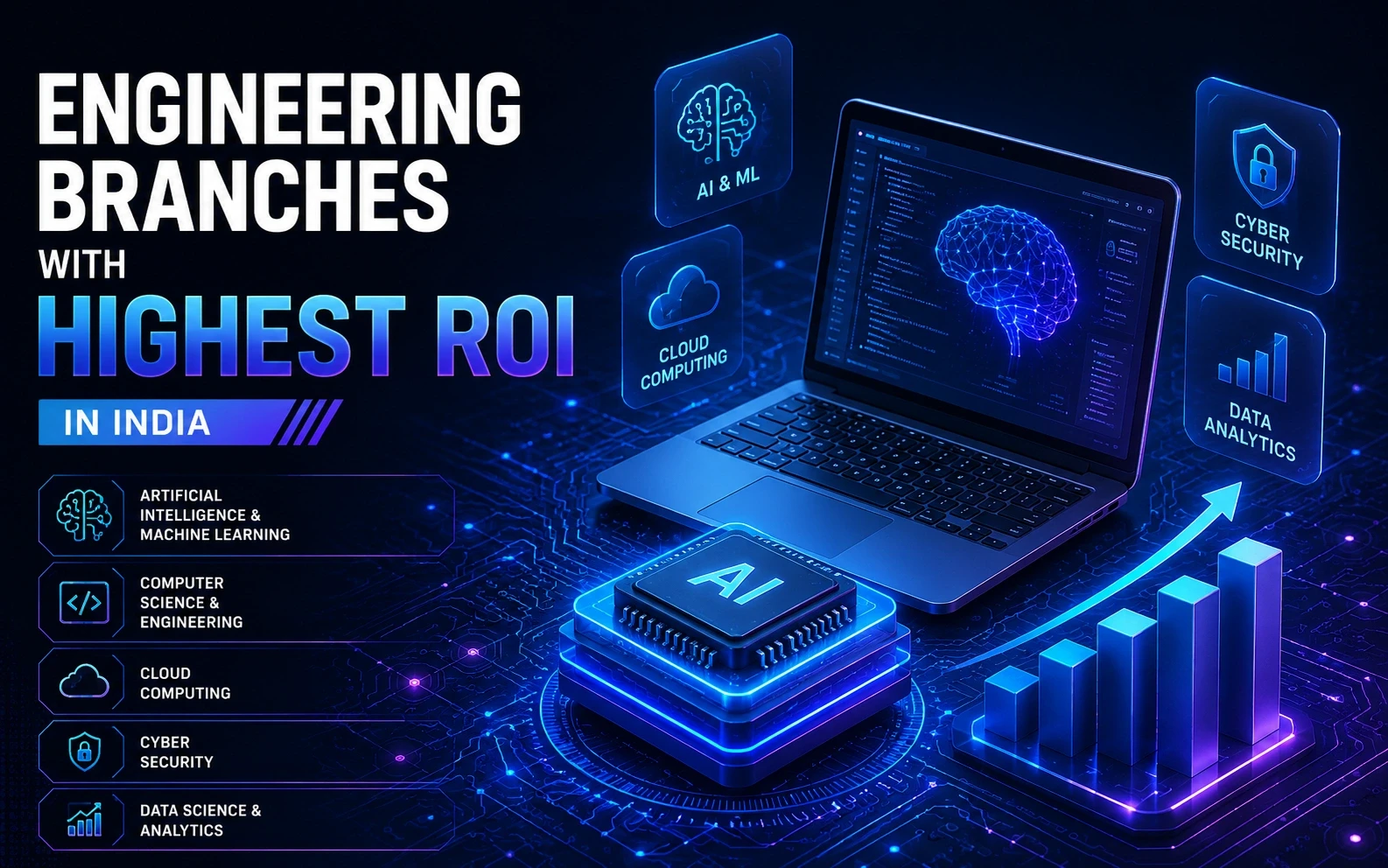
Table of Contents
Introduction
Engineering remains one of India's most popular career choices, but choosing the right branch can be a puzzling situation. With certain industries such as AI, fintech, semiconductors, EVs, and advanced manufacturing expanding rapidly, students today must evaluate not just their interests, but also placement outcomes, industry demand, and long-term career prospects.
The question is no longer “Which engineering branch is popular?” but “Which branch offers the strongest return on investment?” Whether it's Data Science, Artificial Intelligence, Mechanical Engineering, or Civil Engineering, each discipline comes with its own costs, placement prospects, and career outcomes.
If you're a Class 12 student wondering which B.Tech branch is worth pursuing, you're in the right place. In this guide, we'll break down the top engineering specializations based on ROI, comparing tuition costs, placement outcomes, salary potential, and industry demand so you can make a smarter and more confident choice about your future.
Engineering Education ROI in India (2026)
India's fintech market is projected to reach $150 billion by 2025, while hiring in artificial intelligence, cloud computing, cybersecurity, and semiconductor technologies continues to expand across industries, hence the return on Investment (ROI) varies across specializations. A branch with moderate fees and strong placements often provides better ROI than an expensive programme with uncertain job prospects.
Engineering ROI depends on five major factors:
1. Course Fees
BTech fees vary significantly across institutions. Government colleges generally charge lower tuition, while private universities may have higher costs.
2. Placement Rate
A branch with consistent placement records reduces employment risk after graduation.
3. Starting Salary
Higher entry-level compensation shortens the recovery period for educational investment.
4. Career Growth
Industries with expanding demand typically provide better salary progression.
5. Industry Demand
Emerging sectors such as AI, cloud computing, cybersecurity, fintech, semiconductors, and electric vehicles continue to increase engineering hiring.
6. Geographical location of professional network
Tech hotspots like Delhi NCR and Bangalore have developed into one of India's largest engineering employment hubs. The regions supports:
IT services
Fintech companies
Manufacturing
Electronics
Automotive engineering
Product startups
Telecommunications
Students graduating from engineering colleges in Delhi NCR often benefit from internship opportunities and proximity to major employers.
Engineering ROI Formula
When choosing an engineering branch, students should consider overall Return on Investment (ROI) rather than just the highest salary package.
ROI = Course Cost + Placement Rate + Salary Growth + Industry Demand + Career Flexibility
A branch with affordable fees, strong placements, and steady salary growth often provides better long-term value than an expensive programme with uncertain job prospects. Industry demand in areas such as AI, cloud computing, semiconductors, EVs, and cybersecurity can further improve career prospects, while career flexibility allows graduates to adapt to changing technologies and industries.
The best engineering branch is not necessarily the highest-paying one but the option that balances educational costs, employability, long-term growth, and career stability.
BTech Computer Science and Engineering ROI in India
BTech Computer Science and Engineering remains one of the strongest engineering branches in India from an ROI perspective. Digital transformation across industries continues to create demand for software engineers, cloud specialists, cybersecurity experts, and data professionals.
Why BTech CSE Remains Popular
Computer Science graduates work across sectors including:
Technology
Banking
Healthcare
E-commerce
Education
Government
Manufacturing
Unlike many specialised fields, CSE offers broad career flexibility.
BTech Computer Science Salary
Experience | Salary Range |
Entry Level | ₹5–10 LPA |
Mid-Level | ₹10–20 LPA |
Senior | ₹20–40 LPA |
Leadership | ₹40 LPA+ |
Graduates from leading institutions and product companies often receive significantly higher compensation.
Placement Performance
CSE consistently records some of the highest placement percentages among engineering branches because software talent remains in demand across industries.
Major recruiters include:
IT services
Product companies
Fintech firms
Consulting organisations
Startups
Cloud service providers
Connection to Emerging Technologies
Modern BTech Computer Science and Engineering programmes increasingly include:
Artificial Intelligence
Machine Learning
Cybersecurity
Cloud Computing
Blockchain
Data Science
Internet of Things
This interdisciplinary approach improves graduate employability.
Best Fit Student Profile
CSE suits students who enjoy:
Mathematics
Logical reasoning
Programming
Problem solving
Technology innovation
Strong analytical skills and continuous learning are essential because software technologies evolve rapidly.
From an ROI perspective, CSE offers an attractive combination of moderate educational costs, strong placements, and high long-term earning potential.
BTech CS and Data Science vs Traditional CSE
As data becomes the backbone of decision-making across industries, BTech Computer Science and Data Science has emerged as one of the most sought-after engineering specialisations in India. From fintech and healthcare to e-commerce and AI-driven startups, organisations are increasingly looking for professionals who can not only build technology but also extract insights from data.
While traditional Computer Science Engineering (CSE) remains a strong and versatile choice, CS and Data Science programmes are gaining traction for their industry relevance and alignment with future job markets.
Curriculum Advantage
Traditional CSE focuses on core computing concepts such as:
Programming
Algorithms
Databases
Computer Networks
Operating Systems
Software Engineering
BTech CS and Data Science builds on these foundations while introducing specialised skills in:
Data Analytics
Machine Learning
Artificial Intelligence
Statistical Modelling
Big Data Technologies
Data Visualisation
Predictive Analytics
This combination allows learners to graduate with both strong computer science fundamentals and in-demand data skills.
Growing Industry Demand
Data has become a strategic asset for businesses worldwide. As companies invest heavily in AI, automation, and digital transformation, demand for data professionals continues to rise.
Graduates from CS and Data Science programmes are well-positioned for roles such as:
Data Scientist
Machine Learning Engineer
Data Analyst
AI Engineer
Business Intelligence Analyst
Data Engineer
These roles span industries including technology, finance, healthcare, consulting, manufacturing, and retail.
Salary Potential
Branch | Average Starting Salary |
Traditional CSE | ₹5–10 LPA |
CS and Data Science | ₹6–12 LPA |
Candidates with strong analytical, programming, and machine learning skills often command higher salary packages, particularly in technology firms, startups, and data-driven enterprises.
Future Readiness
The future of technology is increasingly data-centric. Organisations are generating more data than ever before and require professionals who can convert information into business value.
A CS and Data Science degree equips students with:
Strong programming foundations
Data analytics expertise
AI and machine learning skills
Statistical thinking
Problem-solving capabilities
Industry-relevant tools and technologies
Which Offers Better ROI?
For students interested in technology, analytics, and emerging digital careers, BTech CS and Data Science can offer excellent ROI. The programme combines the versatility of computer science with specialised data skills that are increasingly valued by employers. As industries continue to embrace AI and data-driven decision-making, graduates are likely to benefit from strong placement opportunities, competitive salaries, and long-term career growth.
Looking for a tech program where you can get a great return on your investment? Explore Rishihood University's B.Tech CS & DS program! |
Engineering Branches With Highest Salary in India
Salary remains an important factor when choosing an engineering discipline. However, long-term growth and industry demand matter as much as initial compensation.
Computer Science Engineering
₹5–10 LPA entry level.
Growth Drivers:
Software development
Cloud computing
Cybersecurity
Product engineering
Computer Science and Data Science
Average Salary:
₹6–12 LPA (entry level)
Growth Drivers:
Data-driven decision making
Artificial Intelligence and Machine Learning
Big Data and Cloud Computing
Fintech and Digital Platforms
Business Analytics
Enterprise Data Transformation
Predictive Analytics and Automation
You can explore affordable CS and Data Science programs at reputed universities that offer scholarships to meritorious students here.
Electronics and Communication Engineering
₹5–9 LPA.
Growth Drivers:
Telecommunications
Embedded systems
Semiconductor manufacturing
Consumer electronics
India's semiconductor initiatives continue to increase demand for electronics professionals.
Mechanical Engineering
₹4–8 LPA.
Growth Drivers:
Automotive
Aerospace
Manufacturing
Robotics
Industrial automation
Is Mechanical Engineering Still Worth It?
Yes. Mechanical engineering continues to provide strong opportunities for students interested in manufacturing, electric vehicles, robotics, and industrial innovation. Specialisation significantly improves salary potential.
Civil Engineering
₹3.5–7 LPA.
Growth Drivers:
Infrastructure
Smart cities
Urban development
Transportation
Construction management
Startup vs Multinational Hiring
Startups often provide faster salary growth and broader responsibilities.
Multinational corporations offer structured career progression and global opportunities.
Students should evaluate long-term career development instead of comparing only initial salary packages.
Engineering Branches With Lowest Fees and Strong Placements
High ROI does not always require expensive education.
Several engineering branches provide attractive career outcomes with reasonable educational investment.
Affordable Engineering Pathways
Government engineering colleges generally reduce tuition costs while maintaining strong placement records.
Branches with efficient ROI include:
Computer Science
Electronics and Communication
Mechanical Engineering
Electrical Engineering
ROI Comparison
Branch | Typical Fees | Average Salary |
CSE | Moderate | High |
AI/ML | Moderate-High | High |
ECE | Moderate | Strong |
Mechanical | Moderate | Stable |
Civil | Lower | Moderate |
Placement Efficiency
Students should compare:
Average placement percentage.
Median salary.
Internship opportunities.
Industry collaborations.
Alumni network.
Recruiter diversity.
Affordable engineering education combined with strong placement support often produces better financial outcomes than expensive programmes with weaker industry connections.
A branch with consistent hiring demand, moderate fees, and long-term career flexibility generally delivers the strongest ROI for Indian engineering students such as CS and Data Science, Mechanical, AI and so on.
ROI Comparison: CSE, AI/ML, ECE, Mechanical & Civil Engineering
Selecting an engineering branch should involve more than comparing average salary packages. Students should evaluate tuition costs, placement records, industry demand, and the time required to recover educational expenses.
Engineering ROI Comparison Table
Branch | Average Course Fee* | Starting Salary | Placement Potential | Industry Demand | Estimated ROI |
Computer Science Engineering | ₹6–16 lakh | ₹5–10 LPA | High | Very High | Excellent |
CS & Data Science | ₹8–18 lakh | ₹6–14 LPA | High | Very High | Excellent |
Electronics & Communication | ₹5–15 lakh | ₹5–9 LPA | High | High | Strong |
Mechanical Engineering | ₹4–10 lakh | ₹4–8 LPA | Moderate | Stable | Good |
Civil Engineering | ₹4–9 lakh | ₹3.5–7 LPA | Moderate | Stable | Moderate |
Placement Comparison
Computer Science Engineering and Computer Science & Data Science consistently attract leading software companies, fintech firms, consulting organisations, analytics companies, and technology startups. The growing adoption of AI, cloud computing, and data-driven decision-making has further increased demand for graduates with strong data and computing skills.
Electronics & Communication Engineering graduates benefit from opportunities in telecommunications, semiconductor manufacturing, embedded systems, consumer electronics, and hardware-focused technology companies.
Mechanical Engineering and Civil Engineering continue to offer stable career pathways through manufacturing, automotive, energy, construction, and infrastructure sectors.
Payback Period
Approximate recovery of educational investment:
Computer Science Engineering: 1–3 years
Computer Science & Data Science: 1–3 years
Electronics & Communication Engineering: 2–4 years
Mechanical Engineering: 2–5 years
Civil Engineering: 3–5 years
Students should also consider career flexibility. Computer Science Engineering and Computer Science & Data Science graduates can pursue opportunities across software development, analytics, AI, fintech, consulting, product management, and emerging technology sectors, strengthening their long-term ROI and career resilience.
Best Engineering Branches for Startup and Tech Careers
Computer Science & Data Science
Best for:
Data-driven startups
Fintech
SaaS companies
E-commerce platforms
Analytics and business intelligence firms
Career options include data science, machine learning engineering, data engineering, analytics, product development, and software engineering.
Demand continues to grow as businesses increasingly rely on data, automation, and predictive insights to drive decision-making and innovation.
Looking for a great option to pursue B.Tech in CS & Data Science? |
Engineering Branch Selection Based on Career Goals
Goal: Software Engineering
Recommended branches:
Computer Science Engineering
Computer Science & Data Science
Information Technology
Suitable for:
Software development
Cloud computing
Cybersecurity
Data engineering
Analytics
Goal: Startup Career
Best options:
Computer Science Engineering
Computer Science & Data Science
Electronics & Communication Engineering
These branches provide strong foundations in technology, data, product development, and entrepreneurship.
Goal: Higher Studies and Research
Students may pursue:
M.Tech
MS
MBA
Research programmes
International education
Recommended branches for research-oriented careers:
Computer Science & Data Science
Electronics & Communication Engineering
Mechanical Engineering
Career Goal Matrix
Career Goal | Recommended Branch |
Software | CSE, CS & Data Science |
Core Industry | Mechanical, ECE |
Government | Civil, Mechanical |
Startup | CSE, CS & Data Science, ECE |
Research | CS & Data Science, ECE, Mechanical |
Management | Any engineering branch |
Future Engineering Hiring Trends in India
Data Science and Analytics are transforming industries including banking, healthcare, manufacturing, education, retail, and fintech. Engineers with skills in data analytics, machine learning, statistical modelling, and automation are increasingly sought after for developing data-driven products and business solutions.
The shift to cloud computing continues to fuel demand for Computer Science and Data Science graduates specialising in data engineering, cloud platforms, analytics infrastructure, and intelligent software systems
Choose an Engineering Branch with Long-Term ROI
Selecting an engineering branch is one of the most important academic decisions after Class 12. Instead of focusing only on the highest starting salary, students should compare course fees, placement rates, industry demand, career flexibility, and long-term growth opportunities.
Computer Science Engineering and Data Science Engineering currently offer some of the strongest ROI due to sustained demand across technology, fintech, analytics, cloud computing, and data-driven industries. Electronics & Communication Engineering benefits from India's growing semiconductor and telecommunications ecosystem, while Mechanical and Civil Engineering continue to provide stable opportunities through manufacturing, automotive, and infrastructure development.
As data-driven technologies continue to reshape industries, many institutions are introducing specialised programmes that combine strong computing fundamentals with advanced analytics. Rishihood University's B.Tech in Computer Science & Data Science integrates core computer science subjects with machine learning, data analytics, statistical modelling, big data technologies, and hands-on projects, while emphasising practical coding, internships, research exposure, and startup engagement. This interdisciplinary approach reflects the evolving expectations of technology employers.
The best engineering branch is one that aligns with a student's interests, aptitude, and long-term career goals while offering sustainable employment opportunities. A balanced approach to branch selection, combined with the right academic environment and industry exposure, can maximize both financial returns and professional growth in India's rapidly evolving engineering landscape.