Business
Why Choose a BBA in Entrepreneurship Degree from Rishihood University in Delhi NCR
A BBA in entrepreneurship gives students exposure to venture creation, startup operations, finance, business strategy, & innovation across a 4 year degree format
26 May 2026
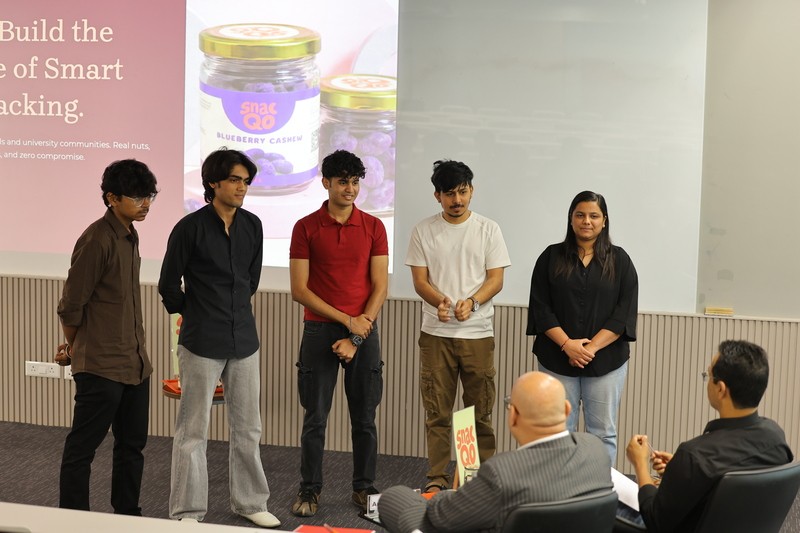
Table of Contents
Introduction
India had more than 100,000 DPIIT-recognized startups by 2023, compared to nearly 10,000 startups in 2016. India also ranks as the world’s third-largest startup ecosystem according to government and industry reports. These numbers have increased student interest in entrepreneurship courses after 12th, especially in regions connected to active startup networks. Delhi NCR has emerged as one of India’s largest business and startup corridors, supported by incubators, investors, technology hubs, and MSME clusters.
A BBA in entrepreneurship gives students structured exposure to venture creation, startup operations, finance, business strategy, and innovation management across a 3–4 year degree format. Unlike short-term startup courses in India, this degree combines academic learning with execution-based projects and market exposure.
Institutions such as Rishihood University in Sonipat, Haryana, near Delhi NCR, represent this newer education model. The university integrates entrepreneurship learning with startup incubation, industry interaction, and family business exposure within the Delhi NCR ecosystem.
Why Students in Delhi NCR Choose BBA in Entrepreneurship After 12th
Delhi NCR contributes to more than 30% of India’s startup ecosystem activity clusters according to NASSCOM ecosystem observations. The region includes startup hubs across Gurgaon, Noida, Delhi, and Sonipat. Students pursuing entrepreneurship courses after 12th often prefer locations connected to active business ecosystems because they gain access to founders, startup events, co-working communities, and industry mentors.
A BBA in entrepreneurship also aligns with changing career patterns in India. The average startup founder age in India falls between 28 and 35 years, showing earlier entrepreneurial participation compared to previous decades. Students increasingly prefer business creation pathways instead of waiting for traditional employment cycles.
Delhi NCR additionally supports sectors such as fintech, edtech, logistics, D2C commerce, AI, and manufacturing startups. This ecosystem exposure helps students understand market operations beyond classroom theory.
What BBA in Entrepreneurship Covers in 3–4 Year Degree Programs
Most BBA in entrepreneurship programs combine business fundamentals with startup-focused learning. Students study accounting, economics, marketing, operations, finance, and organizational behavior during the early semesters. The later semesters usually focus on venture creation, innovation models, startup finance, business scaling, and entrepreneurial strategy.
Unlike generic entrepreneurship courses, degree programs often include structured execution components such as:
Startup incubation projects
Prototype building
Pitch presentations
Market validation assignments
Internship programs
Founder interaction sessions
Capstone venture projects
Students also study legal structures, taxation systems, intellectual property basics, and digital business models. These areas are critical because startup compliance and operational errors affect survival rates in early-stage businesses.
Many universities now integrate experiential learning into entrepreneurship education. Students may work with local MSMEs, family businesses, or startup founders during the degree period. This exposure helps bridge the gap between classroom frameworks and actual market execution.
BBA family business and entrepreneurship programs additionally focus on succession planning, business transformation, operational modernization, and digital adaptation for existing enterprises. This specialization is increasingly relevant in North India, where family-owned businesses contribute significantly to regional trade and manufacturing.
How Rishihood University in Haryana Delhi NCR Structures Startup Learning
Rishihood University operates from Sonipat in Haryana near Delhi NCR, giving students proximity to startup networks across Gurgaon, Noida, and Delhi. The university follows an interdisciplinary approach that combines entrepreneurship education with incubation support and industry exposure.
The university offers a full-time residential BBA Entrepreneurship program under its School of Entrepreneurship in Sonipat, Haryana, near Delhi NCR. The program is available as:
3-Year BBA Degree
4-Year BBA (Hons) Degree
The curriculum combines business fundamentals, entrepreneurship education, technology exposure, leadership development, and startup execution training.
The program differs from conventional BBA structures by emphasizing startup execution, mentorship, and scholarship categories including: Vidya Shree Next-Gen Women Leaders Pragya Jyoti Vividh Samman and Academic merit Financial need Women leadership Sports, arts, and design achievements alongside BBA Entrepreneurship programs positioning itself around:
Startup creation
Technology-enabled business learning
Global exposure
Family business scaling
Leadership development
The university also emphasizes social innovation, ethical leadership, and practical business problem-solving. Students interact with entrepreneurs, investors, and business professionals through workshops and live sessions connected to the NCR ecosystem with student ventures including:
In.culcate — Indian history storytelling app incubated at ISB Hyderabad
Bocadoh — fruit-flavoured coconut chips startup
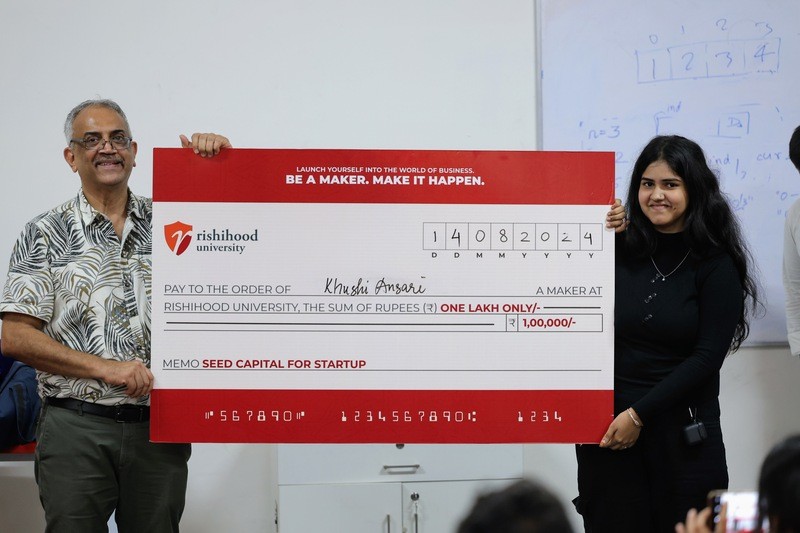
Tru Pahadi — regional healthy snacks brand receiving ₹10 lakh Makers Fund support
This structure differs from many conventional Bachelors degree in business programs that primarily focus on management theory and corporate employment preparation.
BBA in Entrepreneurship vs Other Entrepreneurship Courses After 12th in India
India’s entrepreneurship education market includes certificate programs, diploma courses, bootcamps, online startup programs, and full-degree options. However, these formats differ significantly in depth, duration, and execution exposure.
Short-term startup courses in India generally focus on specific areas such as idea validation, digital marketing, startup funding, or product development. These courses usually last from a few weeks to several months. They provide tactical learning but often lack structured business foundations.
A BBA in entrepreneurship differs because students spend 3–4 years studying both business management and venture-building systems. The curriculum includes:
Financial management
Operations systems
Consumer behavior
Business analytics
Startup strategy
Market research
Team leadership
Investor communication
Degree programs also include academic evaluation, long-term projects, internships, and incubation activities that short-term entrepreneurship courses rarely provide.
Another major difference involves credibility and scalability. A Bachelor's degree in business remains widely accepted for higher education, international applications, and professional transitions. Short-term startup certifications may support skill development but usually cannot replace a full undergraduate degree.
Students planning to build scalable businesses, join family enterprises, or pursue venture leadership roles generally prefer degree-based entrepreneurship education because it combines strategic depth with practical exposure.
Difference Between BBA Entrepreneurship and General Bachelors Degree in Business
A general Bachelor's degree in business usually prepares students for corporate functions such as HR, finance, marketing, or operations management. The curriculum primarily focuses on organizational management structures and employment-oriented business processes.
A BBA in entrepreneurship shifts the focus toward business creation, opportunity identification, risk analysis, and venture scaling. Students learn how to validate business models, build products, acquire customers, and raise funding.
The assessment style also differs. Entrepreneurship-focused programs often include:
Startup simulation exercises
Investor pitch presentations
Business model design
Innovation projects
Venture incubation assignments
General BBA programs may rely more heavily on exams and management case studies.
BBA family business and entrepreneurship specializations additionally prepare students to modernize existing enterprises. Haryana and Delhi NCR contain thousands of MSMEs and family-run businesses operating in manufacturing, retail, logistics, and distribution sectors. Entrepreneurship-focused degrees help students understand succession planning, operational restructuring, and digital transformation strategies.
Role of Family Business and Entrepreneurship in Haryana-Based Education
MSMEs contribute nearly 30% of India’s GDP according to government estimates. North India contains a large concentration of family-owned businesses across sectors such as textiles, manufacturing, automotive supply, agriculture trading, and wholesale distribution.
A BBA family business and entrepreneurship program addresses challenges faced by second-generation business owners. Students learn operational scaling, digital integration, financial restructuring, and succession management.
Haryana’s industrial ecosystem also creates practical learning opportunities. Students can observe how traditional businesses adapt to e-commerce systems, supply-chain digitization, and startup-driven competition.
This specialization is important because many Indian family enterprises now require modernization strategies instead of only operational continuity.
Startup Ecosystem Access Near Delhi NCR for BBA Students
Delhi NCR remains one of India’s strongest startup ecosystems due to investor concentration, technology infrastructure, and business connectivity. Startup founders in NCR operate across fintech, SaaS, edtech, healthcare, logistics, AI, and D2C sectors.
Students pursuing entrepreneurship courses near Delhi NCR gain access to:
Startup networking events
Founder meetups
Incubation centers
Venture capital interactions
Industry conferences
Co-working communities
This environment supports applied learning. Students can study customer acquisition, fundraising patterns, product-market fit, and scaling models directly from operating startups.
The NCR region also connects students to corporate ecosystems and manufacturing hubs across Haryana and Uttar Pradesh, creating broader exposure than isolated academic campuses.
Career Paths After BBA in Entrepreneurship in India
Students completing a BBA in entrepreneurship pursue multiple career pathways depending on their interests and industry exposure.
Common options include:
Startup founder
Business development executive
Product associate
Innovation analyst
Family business manager
Operations executive
Growth strategist
Startup consultant
Some graduates also pursue MBA programs, venture incubation programs, or startup accelerators after completing their undergraduate degree.
India’s startup funding ecosystem crossed $25 billion annually during peak investment years. This growth increased demand for professionals capable of working in early-stage business environments. Entrepreneurship graduates also benefit from transferable business skills applicable across startups, SMEs, and corporate innovation team.
A major advantage of entrepreneurship-focused education is exposure to practical business execution. Rishihood University in Sonipat, near Delhi NCR, structures its BBA program around startup projects, mentorship interaction, and interdisciplinary learning connected to the NCR startup ecosystem. Students gain exposure to venture-building frameworks, market validation, and real-world business problem-solving during the program itself.
Eligibility and Admission: Who Should Apply for BBA Entrepreneurship Courses After 12th
Students from commerce, science, and humanities backgrounds can apply for most BBA in entrepreneurship programs after completing Class 12 education.
Universities generally evaluate:
Academic scores
Entrance tests
Personal interviews
Statement of purpose
Entrepreneurial interest or extracurricular activities
Students interested in startup ecosystems, family business management, innovation, or business leadership often prefer entrepreneurship-focused degree programs over traditional commerce pathways.
Frequently Asked Questions :
Is BBA in Entrepreneurship better than B.Com for startups?
BBA in entrepreneurship focuses on venture creation, startup execution, incubation exposure, and business strategy. B.Com primarily emphasizes commerce, accounting, and financial systems.
What is the difference between startup courses in India and a BBA degree?
Startup courses in India are usually short-term skill programs. A BBA degree provides 3–4 years of structured business and entrepreneurship education.
Can students from non-commerce background apply?
Yes. Most universities accept students from science, arts, and commerce streams.
Is BBA family business and entrepreneurship useful for traditional businesses?
Yes. The specialization helps students modernize family enterprises using operational, digital, and strategic business frameworks.