Technology
Will AI Replace BTech Engineers by 2030? Should You Still Choose Engineering in India?
Will AI replace BTech engineers by 2030 in India? Explore AI-proof engineering careers, salary trends, job demand by specialisation, and whether a BTech degree is still the right choice in 2026.
24 June 2026
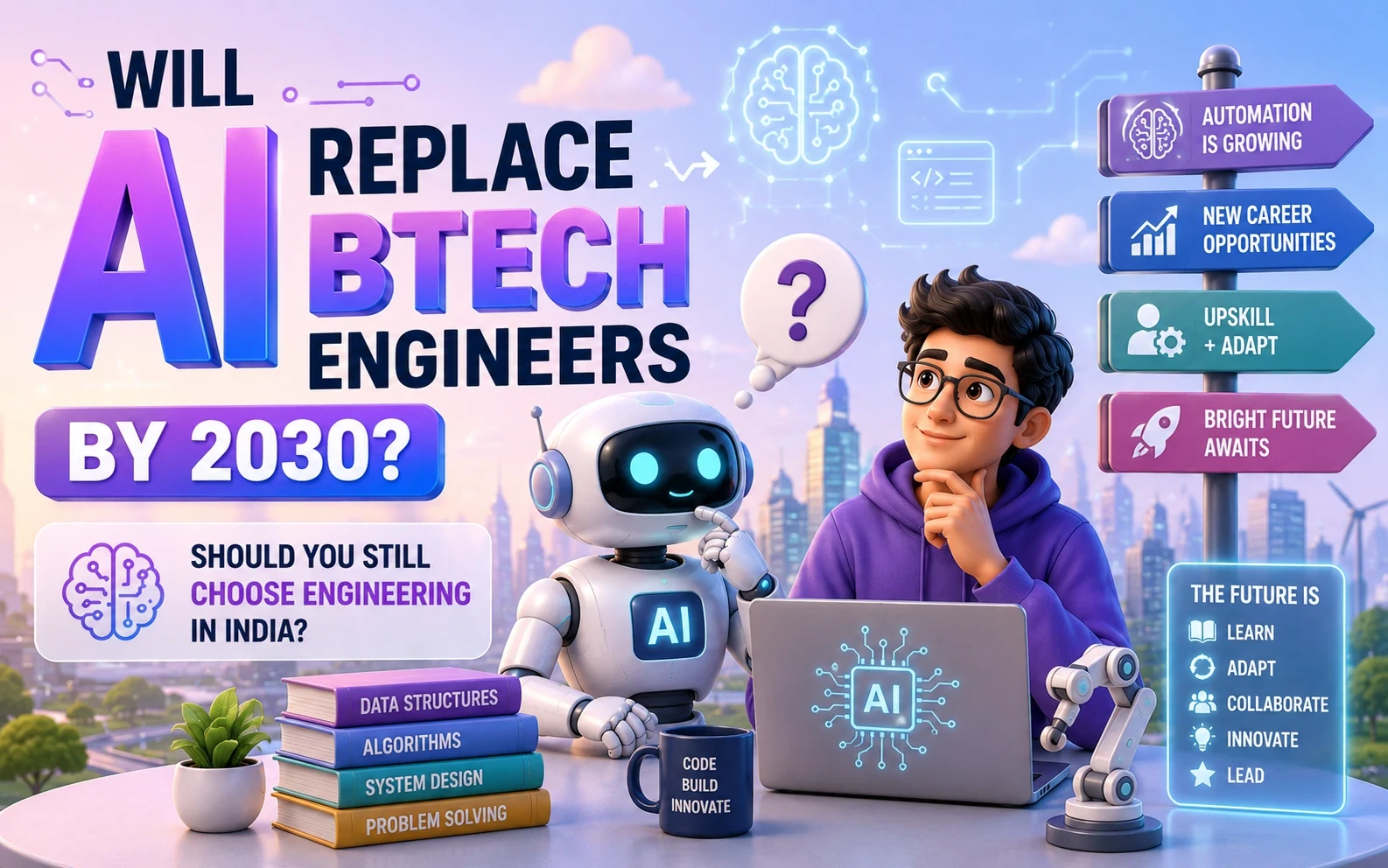
Table of Contents
Introduction
Every few months, a new headline appears:
"AI will replace coders"
"Engineers are becoming obsolete"
"Your BTech degree will be worthless by 2030"
If you are a Class 12 student picking your stream, this noise is genuinely confusing.
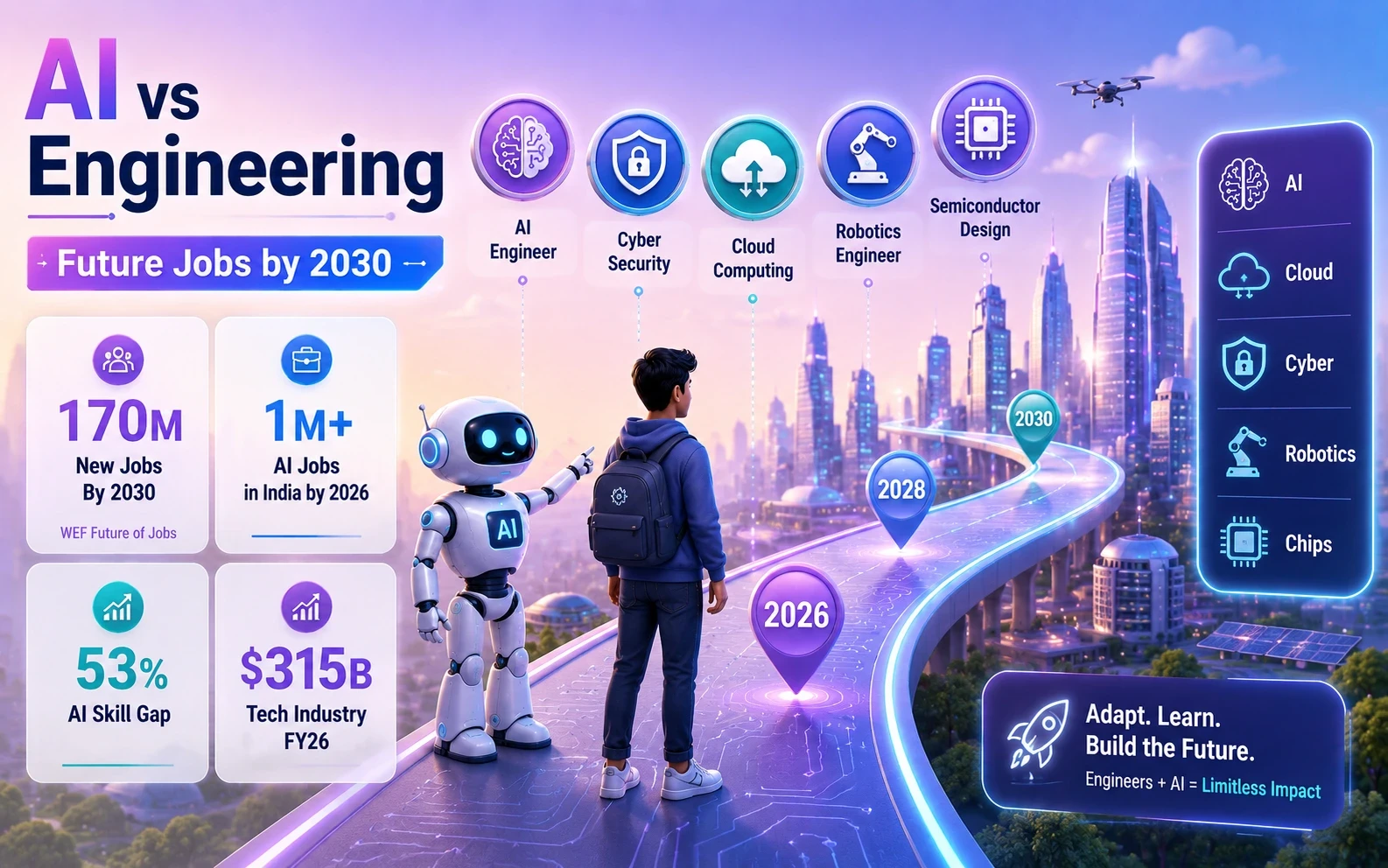
But the reality is that the World Economic Forum's Future of Jobs Report 2025 projects that 170 million new jobs will be created globally by 2030, while 92 million roles will be displaced, which is a net positive of 78 million jobs.
And among the fastest-growing roles?
Big data specialists, fintech engineers, and AI and machine learning specialists top the list.
So, AI is not destroying engineering careers. It is reshaping what engineers do, simultaneously increasing the value of those who adapt.
This post explores the reality behind AI-driven automation, the future of engineering jobs in India, salary trends, emerging specialisations, and what students should know before pursuing engineering in 2026 and beyond.
Will AI Replace BTech Engineers by 2030?
AI is changing how engineers work. Tools like GitHub Copilot, Amazon CodeWhisperer, and AI-powered testing platforms can write boilerplate code, spot bugs, and generate basic functions at speeds no human can match. As per the recent surveys, engineers using Copilot completed tasks 55% faster than those who did not.
But faster coding tools do not mean jobless engineers. Think about what happened when calculators arrived — mathematicians did not disappear. They moved to solving harder problems. The same logic applies here.
The critical distinction is between automation and augmentation. AI will automate routine coding tasks, but cannot replace roles that require cross-system reasoning, and creative thinking.
The world's tech companies are proving this. IBM generated $3.5 billion in productivity gains over two years by using AI to augment human intelligence. The automation actually created demand for specialised roles like software engineers and marketing specialists.
IBM CEO Arvind Krishna put it directly: "When people become more productive, organisations don't shrink; they grow."
So will AI replace BTech engineers by 2030?
Not the ones who adapt. What AI will replace are specific tasks within engineering, and the engineers who refuse to evolve. The engineers who learn to work with AI will have a significant advantage over those who simply compete against it.
Why BTech Still Matters in India's Technology Economy
India's technology economy is not shrinking. It is undergoing one of the fastest structural expansions in its history, and is hungry for engineers. The tech sector is projected to cross $315 billion in FY26, with direct employment reaching ~6 million, a net addition of 135,000 jobs in a single year.
Three forces that are driving fresh BTech demand:
AI engineering
Demand for AI talent in India is projected to cross 1 million roles by 2026, against a 53% skill deficit. This gap needs trained engineers, not certificate holders.
GCCs
India hosts 1,700+ Global Capability Centres employing 19 lakh+ professionals, handling product development, engineering, and AI-led services, not just back-office work.
Semiconductors
India's semiconductor market is projected to grow from $45 billion in 2025 to $100 billion by 2030. Indian engineers already design ~20% of the world's chips.
Yet only a small share of graduates have the specialist skills these roles require. For BTech students choosing the right specialisation, demand through 2030 is expected to remain strong.
A question many students are asking today:
"Do engineering degrees like B.Tech or BE still make sense after AI took over?"
One engineering graduate answered it succinctly on Quora:
"Absolutely, but the way they are taught needs a serious revision."
Engineering Roles Most at Risk From AI Automation
Indian IT services companies have already reduced entry-level roles by 20–25%. That is a real shift, and students need to understand it clearly. But only entry-level roles are shrinking, not engineering as a whole.
So which specific roles are under the greatest pressure?
Routine coding and boilerplate development
AI tools like GitHub Copilot are especially good at writing repetitive code, such as API integrations, CRUD operations, and front-end templates.
Basic software testing and QA
Manual test case writing and regression testing are increasingly absorbed by automated testing platforms, leaving little room for engineers whose only skill is manual QA.
Low-complexity maintenance work
Bug fixes in legacy systems, minor feature additions, and documentation-heavy roles are being rapidly replaced by AI-assisted development workflows.
Low-skill IT outsourcing roles
India's early IT industry grew on cost-effective outsourcing. Many entry-level coding jobs that traditionally served as a starting point for engineers can now be automated.
What does this mean?
The future belongs to engineers who can do more than write code. Those who combine technical knowledge with critical thinking and practical skills, will remain valuable even as AI automates routine tasks.
AI-Proof Engineering Careers in India
The safest engineering careers in the AI era are the ones that help build, secure, deploy, and manage AI-driven systems.
Here are some of the most future-ready engineering specialisations:
Specialisation | What You'll Work On | AI Automation Risk | Demand Outlook |
Artificial Intelligence & Machine Learning | Building AI models, intelligent applications, and automation systems | Low | Very High |
Cybersecurity Engineering | Protecting networks, cloud systems, and digital assets | Low | Very High |
Cloud Engineering | Managing cloud infrastructure and scalable applications | Low | High |
Data Engineering | Building data pipelines and analytics infrastructure | Low | High |
Robotics Engineering | Designing autonomous machines and industrial automation systems | Low | High |
Semiconductor Engineering | Chip design, fabrication, and electronics innovation | Very Low | Very High |
Embedded Systems Engineering | Hardware-software integration for smart devices | Very Low | High |
Product Engineering | Developing end-to-end technology products and platforms | Low | High |
In short, engineers most likely to thrive by 2030 will combine strong technical foundations with emerging technology skills. Across all these fields, internships play a critical role in turning classroom learning into real-world experience and job opportunities.
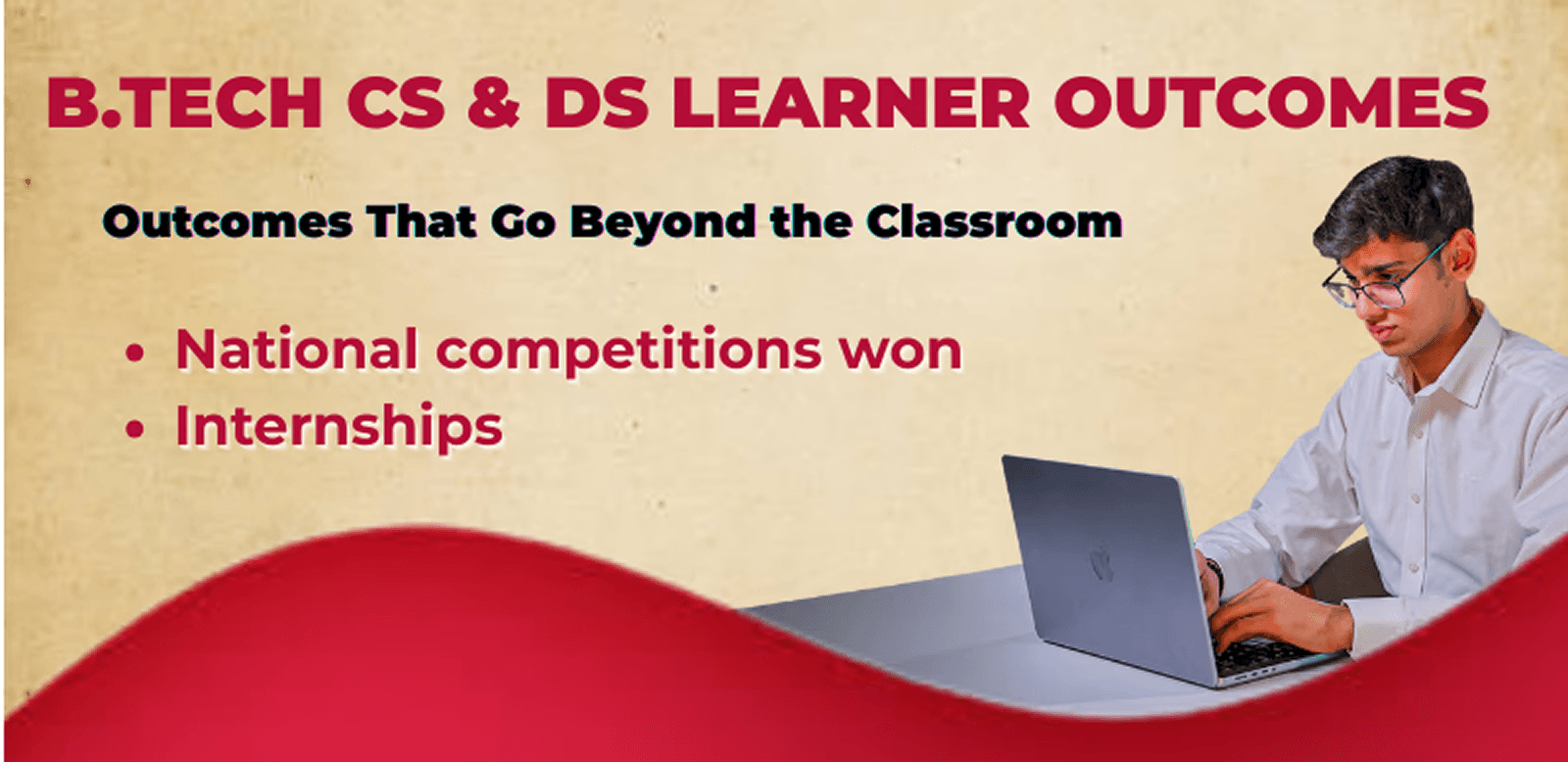
Rishihood University's B.Tech CS & AI and B.Tech CS & Data Science programs, offered with Newton School of Technology, focus on these future-ready specialisations. The programs are guided by 100+ CXO mentors, and 93% of second-year students secure internships with an average stipend of ₹25,000 per month.
BTech Salary Trends in India by 2030-Oriented Specialisation
The salary gap between specialisations is widening. Choosing the right branch today is a direct financial decision for the next decade.
Specialisation | Fresher (0–2 yrs) | Mid-Level (3–5 yrs) | Senior (5+ yrs) |
AI / ML Engineering | ₹6–10 LPA | ₹18–25 LPA | ₹30+ LPA |
Cybersecurity | ₹4–7 LPA | ₹10–18 LPA | ₹25+ LPA |
Cloud / DevOps | ₹5–8 LPA | ₹12–20 LPA | ₹22+ LPA |
Semiconductor / VLSI | ₹5–8 LPA | ₹12–18 LPA | ₹22+ LPA |
Core CSE / Software | ₹4–8 LPA | ₹10–15 LPA | ₹18+ LPA |
Specialised BTech concentrations in AI & ML, cloud computing, data science, and cybersecurity attract premium offers because of niche skill requirements, while general CSE graduates from non-tier-1 institutes typically start around ₹4.5–7 LPA.
Startup vs MNC: Compensation varies widely. Well-funded startups may offer higher salaries than service-based firms, while large MNCs often provide greater stability and structured career progression.
Location matters: Bengaluru, Hyderabad, and Gurgaon remain India's highest-paying tech hubs. Salaries in Tier-2 cities are typically lower, though remote work is reducing the gap.
The 2030 outlook: By 2030, professionals in AI, ML, cloud, and data roles could earn ₹30–40 LPA at the mid-career level, compared to ₹15–20 LPA in many traditional engineering roles. The salary gap between specialised and general engineering careers is expected to grow.
At Rishihood University, BTech students work on live industry projects and AI-integrated coursework from Year 1, so by graduation, your portfolio speaks louder than your college name.
Explore BTech programmes at Rishihood.
Should Students Still Choose BTech in India in 2026?
Short answer: yes, but with your eyes open.
The degree still has strong foundational value
A BTech degree gives students a strong foundation in science, mathematics, and engineering. Over four years, students learn how to solve complex problems and understand how technology works. Short-term certifications can teach specific skills, but they usually do not provide the same depth of learning.
Skills matter more than the college name
Engineering works best for students who treat it as a skill-building journey, not just a degree. A student who joins a decent college, learns to code, builds projects, and does internships can secure a strong job even without an IIT tag. For example, a student from a tier-3 college with strong DSA skills, GitHub projects, and internships can easily secure ₹8–15 LPA at product-based companies.
Who should choose BTech
Students with genuine interest in technology and systems
Students willing to build skills beyond the syllabus through projects and internships
Students choosing programmes that integrate AI tools, industry exposure, and hands-on learning from Year 1
Who should reconsider
Students chasing a degree purely for social validation with no interest in the field
Students picking colleges based only on fee structure without evaluating placement records and curriculum relevance
The future belongs to engineers who can combine technical knowledge with real-world problem-solving. A real-life example is of Parth Vardhan Saxena, a student from Rishihood. He founded TRU Pahadi, a healthy regional snacking brand, and received a ₹10 lakh investment from Rishihood’s Makers fund. - Instagram.
Top Engineering Colleges in Delhi NCR and Haryana
The Delhi NCR and Haryana belt offers a wide range of engineering options — from government institutions with elite placement ecosystems to private universities building genuinely modern, industry-aligned programmes.
Government Institutions
As per NIRF Rankings 2025, IIT Delhi leads the engineering category at rank 2 nationally, followed by Jamia Millia Islamia, DTU, and Netaji Subhas University of Technology. These institutions offer exceptional placement outcomes but are highly competitive, entry requires strong JEE Main and JEE Advanced scores.
Private Engineering Universities in Delhi NCR
The best private engineering colleges in Delhi NCR are UGC-recognised and AICTE-approved, with several holding international accreditations and MoUs with global universities. For example, Rishihood offers modern infrastructure, experienced faculty, and dedicated placement support.
What to Look for When Choosing
When evaluating any BTech college in Delhi NCR or Haryana, prioritise these factors:
AI and emerging tech infrastructure, like labs, tools, and updated syllabi
Industry partnerships and internship pipelines
Placement records verified through NIRF data, not just college brochures
Project-based and experiential learning built into the curriculum
Why Rishihood University Stands Apart
Located in Sonipat, near Delhi NCR, Rishihood University offers BTech programs designed to prepare students for modern careers. Small class sizes allow students to receive personalized mentorship and guidance. From the first year, students work on real-world projects, learn to use AI tools, and develop entrepreneurial skills. The goal is to help students graduate with practical experience, not just a degree.
Learn more on startups founded by Rishihood’s learners
BTech vs Short-Term AI Courses in India
With hundreds of AI certifications, bootcamps, and online courses available today, many students wonder whether a four-year engineering degree is still necessary.
The answer depends on your career goals.
What short-term AI courses do well
A well-designed certification programme can teach practical tools fast. They are excellent for learning specific tools, programming frameworks, or emerging technologies. They can help students and working professionals gain practical exposure to machine learning, data analytics, prompt engineering, or AI applications in a relatively short period.
Where short-term courses fall short
The gap shows up at the depth level. The challenge is that certifications often teach how to use tools, while a BTech teaches how the technology works. To build AI systems, engineers need a strong understanding of machine learning, data, and software systems. These are complex subjects that usually require years of study, not just a few weeks of training.
BTech Degree | Short-Term AI Course |
Strong engineering foundation | Skill-specific training |
Broader career flexibility | Focused on a particular tool or domain |
Recognized by employers across industries | Best used as a supplement |
Covers theory and practical application | Primarily application-focused |
Supports long-term career growth | Useful for upskilling and specialisation |
The smart approach
The best engineers in 2030 will hold both, a strong BTech foundation plus relevant AI certifications stacked on top. The degree builds depth; the certifications signal current tool fluency to recruiters.
At Rishihood University, BTech students are encouraged to pursue industry certifications alongside their degree, combining foundational engineering rigour with the kind of practical AI portfolio that today's employers actually hire for.
Explore the BTech curriculum at Rishihood.
Engineering Skills That Actually Matter in the AI Era
Knowing which skills to build is now as important as choosing the right branch. Here is what India's hiring market is actually rewarding in 2026.
1. System Design
Writing code is important, but employers increasingly value engineers who can design complete systems. This means understanding how different parts of a product work together and building solutions that can handle real users at scale.
2. Working with AI Tools
Tools like GitHub Copilot, Cursor, and OpenAI APIs are becoming part of everyday software development. Engineers who know how to use these tools effectively can work faster and build better products.
3. Cloud and Infrastructure Skills
Most modern applications run in the cloud. Skills in platforms like AWS, Azure, and Kubernetes help engineers build, deploy, and manage applications used by thousands or even millions of people.
4. Problem-Solving and Critical Thinking
AI can generate code, but it cannot fully understand business problems or make complex decisions. Engineers still need to analyze situations, find solutions, communicate clearly, and work with teams.
5. Continuous Learning
Technology changes quickly. The most successful engineers keep learning throughout their careers, whether it is a new programming language, AI tool, or emerging technology.
Build a Foundation That Lasts Beyond Today's Technology Trends
Technologies change quickly, but strong engineering fundamentals remain valuable across industries and career paths. That's why future-focused BTech programs combine core engineering principles with exposure to emerging technologies and real-world applications.
Future Trends in India's Engineering Job Market
The engineering job market in 2030 will look very different from today. Students choosing a BTech now can gain an advantage by understanding where opportunities are growing.
AI Becomes Part of Every Engineering Job
AI is becoming a standard tool in engineering workflows, increasing productivity and changing how products are designed and developed. Companies are investing heavily in AI, creating strong demand for professionals who can build, manage, and work alongside AI systems.
Growth in Semiconductor Engineering
India is investing in domestic chip manufacturing, creating new opportunities for semiconductor, electronics, and VLSI engineers. This is expected to remain a major growth area throughout the decade.
Rising Demand for Green Technology
As countries invest in renewable energy and sustainability, demand is growing for engineers who can work on solar energy, electric vehicles, battery technology, and sustainable manufacturing.
Robotics Moves into New Industries
Robotics is no longer limited to factories. Engineers are increasingly building robots for healthcare, logistics, transportation, defense, and other industries.
More Jobs in Cloud and Digital Infrastructure
As businesses continue moving online, demand for cloud engineers, DevOps professionals, and data engineers is expected to grow. Building and managing digital infrastructure will remain a key engineering skill.
Rishihood advantage: Rishihood's B.Tech programs combine engineering fundamentals with AI tools, hands-on projects, and industry mentorship from the first year. The goal is to prepare students for the skills and careers that employers will need in the years ahead.
Build Engineering Skills for the AI Era
The fear that started this article — "will AI replace engineers?" — turns out to be the wrong question. The evidence suggests that engineering is evolving. While routine coding and repetitive tasks may become increasingly automated, demand continues to grow for professionals who can design systems, build products, solve complex problems, and apply technology in meaningful ways.
Choosing the right college can be just as important as choosing engineering itself.
Rishihood University's B.Tech programs in CS & AI and CS & Data Science are built around skills required for the AI world. No JEE required, admission through RSAT and interview with a 60% Class 12 minimum, and a curriculum shaped by 100+ CXO mentors.
Explore the admissions process and programme details to determine whether Rishihood is the right fit for your goals. Talk to our team today.
FAQs
1. Will AI replace software engineers by 2030?
AI is expected to automate routine coding, testing, and maintenance tasks, but it is unlikely to replace software engineers entirely. Engineers will continue to be needed for system design, product development, architecture, problem-solving, and innovation. The role of engineers is evolving rather than disappearing.
2. Is B Tech Computer Science still a good career option after AI?
Yes. B Tech Computer Science remains one of the most versatile engineering degrees. As AI becomes integrated into software development, employers are increasingly looking for graduates who understand computer science fundamentals, AI tools, cloud technologies, and system design.
3. Which engineering branches have the best future scope in India?
Some of the most promising specialisations include Computer Science Engineering, Artificial Intelligence and Machine Learning, Cybersecurity, Data Science, Cloud Computing, Electronics and Communication Engineering, Embedded Systems, and Semiconductor Engineering.
4. Is a BTech degree better than a short-term AI certification?
For most students, a BTech degree provides stronger long-term career flexibility because it builds foundational knowledge in engineering, mathematics, and technology. AI certifications can be valuable additions, but they are generally most effective when combined with a strong academic foundation.
5. What should I look for when choosing a BTech college in Delhi NCR or Haryana?
Prioritise AI and emerging tech infrastructure, verified placement records through NIRF data, industry partnerships with active internship pipelines, and a curriculum that integrates project-based and hands-on learning from Year 1, not just in the final semester. College brand matters less over time than the skills and portfolio you graduate with.